Product Description
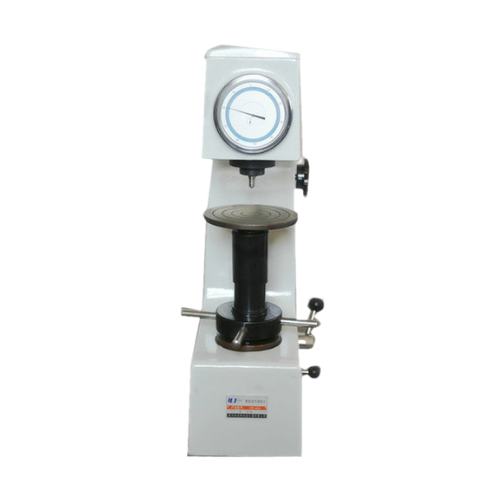
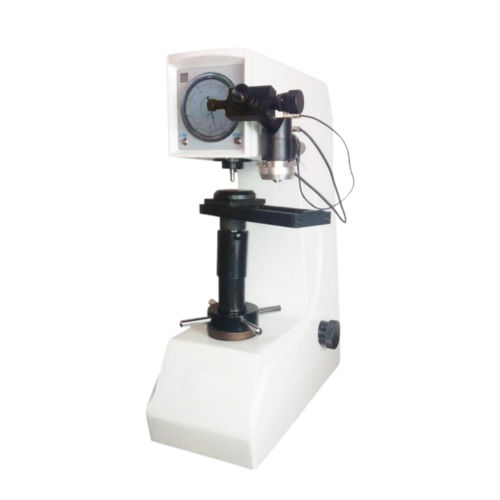
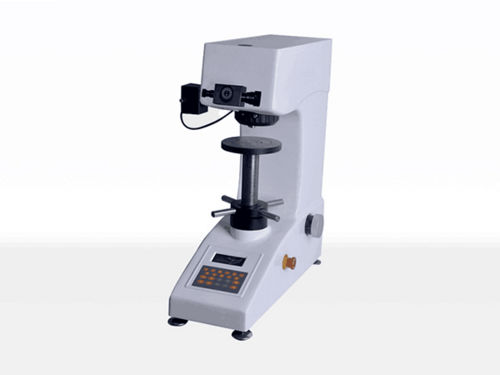
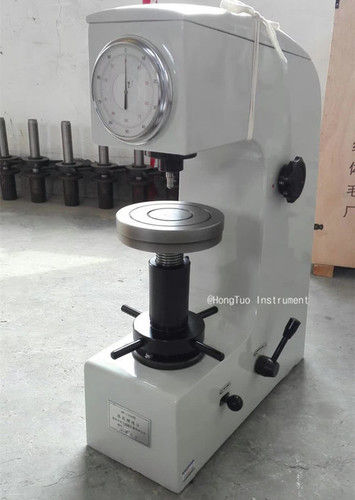
Superficial Rockwell Hardness Tester
Application:
Determine the superficial hardness of ferrous metals, alloy steel, carbide and metal after nitriding, cyanidation, carburizing, electroplating and other surface treatment;
It is suitable for the hardness test of small parts and thin samples.
Main Features:
Manual superficial hardness tester HR45A has stable and reliable performance, it is economical type without electric power supply;
The dial reads the hardness value directly, indicator responses sensitively, show the hardness value accurately, the test value is more accurate than national standard;
Direct dial readings,with scales of HRN,HRT(other Rockwell scale optional);
Onetime casted molding shell, stable structure and it is not easy to be out of shape. It can work under harsh environment;
Precision conforms to GB/T230.1/.2 National Standard,ISO 6508-2, ASTM E18.
Specifications:
Measuring range:70-94HR15N, 42-86HR30N,20-77HR45N, 67-93HR15T, 29-82HR30T, 10-72HR45T
Test force:147.1, 294.2, 441.3N (15, 30, 45kgf)
Max. height of test piece: 170mm
Depth of throat: 135mm
Hardness resolution: 0.5HRN(T)
Dimensions: 466 x 238 x 630mm
Weight approx.: 65kg
Reliable and Accurate Hardness MeasurementWith a measuring range covering HR15N, HR30N, and HR45N scales, this tester ensures precise results for a variety of metals. Preliminary and total test forces enable accurate indentation using diamond or steel ball options. The analog dial provides instantaneous readings to streamline your quality control and inspection processes.
Versatile and User-Friendly DesignThe tester's manual operation is straightforward, requiring minimal training. Its benchtop mounting, robust cast iron body, and powder-coated finish guarantee durability and stability. Supplied with standard accessories, it's ready for use in laboratory, factory, or industrial settings.
FAQ's of Superficial Rockwell Hardness Tester:
Q: How do I operate the Superficial Rockwell Hardness Tester?
A: To operate the tester, place your specimen on the appropriate anvil, set the desired test force (15, 30, or 45 kgf), then manually lower the indenter to make contact. The analog dial instantly displays the hardness value, making the process simple and efficient.
Q: What types of materials can be tested with this instrument?
A: The Superficial Rockwell Hardness Tester is designed for measuring the superficial hardness of metals, including ferrous and non-ferrous specimens, as long as they fit within the maximum height of 45 mm.
Q: When is it appropriate to use superficial Rockwell testing instead of standard methods?
A: Superficial Rockwell testing is ideal for thin or surface-hardened specimens where full-depth indentation may compromise the material. It's commonly employed in applications requiring non-destructive surface assessment.
Q: Where can this hardness tester be utilized effectively?
A: The device is suitable for metallurgical laboratories, engineering workshops, and quality control departments, especially for on-site or benchtop hardness evaluations in manufacturing and research environments.
Q: What is the minimum and maximum specimen size that can be accommodated?
A: The machine accommodates specimens up to 45 mm in height and a test width of 100 mm, allowing individual testing of various shapes and sizes with the supplied flat and V-type anvils.
Q: How does this tester benefit users in industrial or laboratory settings?
A: Users benefit from its robust construction, straightforward manual operation, direct analog readings, and compliance with international standards, ensuring reliable and repeatable superficial hardness results for quality assurance needs.
Q: What process does the tester follow to measure hardness?
A: After placing the specimen, the device applies a preliminary load of 3 kgf, followed by a total load (15, 30, or 45 kgf). The indenter forms a small impression, which is instantaneously measured and displayed on the dial, providing direct hardness values.










 Send Inquiry