Product Description
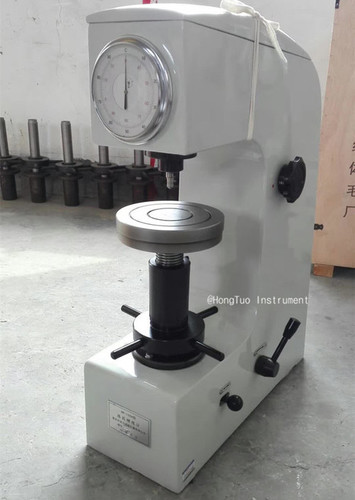
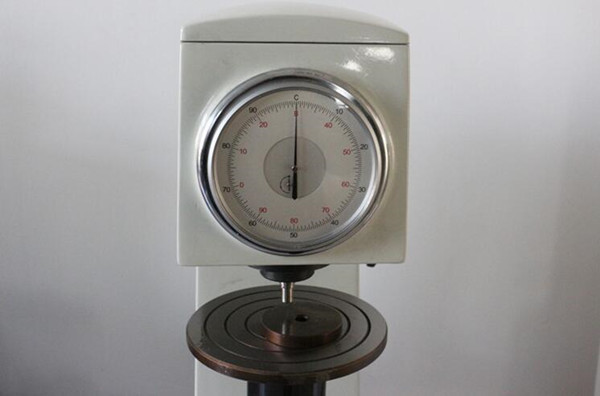
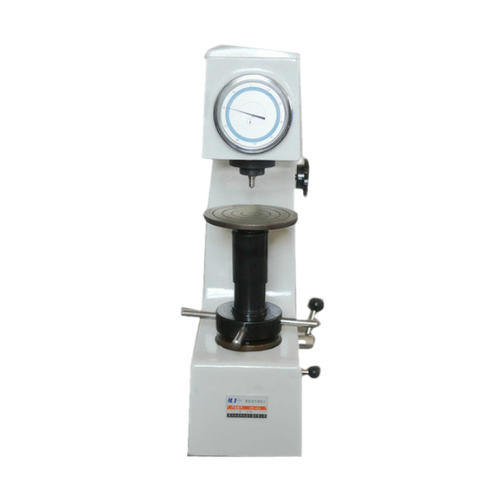
Rockwell Hardness Tester Manual , Type of Tablet Hardness Tester
Brief Introduction:
This instrument is in accordance with the Rockwell measuring principle.it can do the testing of Rockwell hardness directly.It has the feature of easy operation,stable reading,convenient maintenance.This instrument is the new design loading and unloading easy operation all-in-one machine,improve the operation procedure compared to the old products HR-150A.which makes machine more stable,durable,and efficient.
Application:
Ferrous metal,non-ferrous metal,non-metal materials;
Quench,tempering.,etc heat treatment materials;
Tempered steel,annealed steel,quenched steel,surface hardened steel,chill casting,forging,hard alloy steel,aluminum alloy,bearing steel,hardened sheet steel.
Features:
- Accurate data,high testing efficiency.
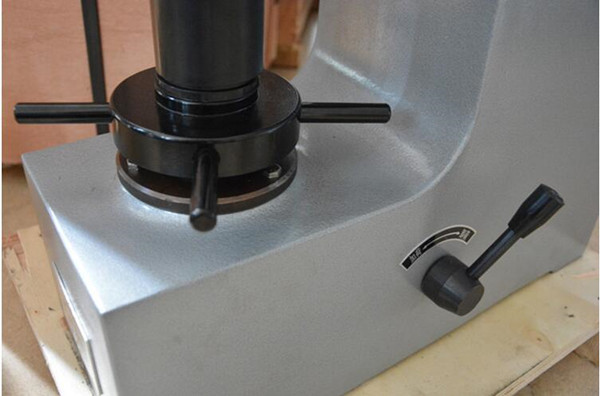
- Leverage of loading,manual operation,durability and reliability
- Non-friction spindle,high accuracy.
- HRA,HRB,HRC scale can be read directly through dial plate.other Rockwell scale is available.
- Adopt precision oil pressure buffer,loading speed is adjustable.
- Mechanical manual testing process.no needs electric controlling.
- Widely apply to quality monitoring on production site.good working environment adaptability
- 8. The accuracy is in accordance with GB/T230.2,ISO 6508-2 and US ASTM E18.
Main Technical Specification:
- Measuring range:20-88HRA,20-100HRB,20-70HRC
- Testing force:588.4,980.7,1471N(60,100,150kg)
- Allowed maximum height of testing specimen:170mm
- Distance from centre of pressing head to machine wall:135mm
- Hardness resolution:0.5HR
- Exterior size:466*238*630mm
- Weight:Around 75kg
Main Accessories:
Big testing table:one pcs;diamond circular cone indenter:one pcs;
Small testing table:one pcs;1/16A AcA A A A A AcA A A A stell ball indenter:one pcs;
V shape testing table:one pcs;standard rockwell hardness block:5 pcs.
Precision Hardness Testing for TabletsThis manual Rockwell hardness tester provides accurate and reliable measurements for the hardness of tablets and solid dosage forms. Its precise dial gauge, robust construction, and overload protection ensure dependable performance within pharmaceutical quality control environments. Its manual operation means no electrical supply is necessary, making it suitable for laboratories and manufacturing facilities alike.
Durable Design and Easy MaintenanceConstructed with durable cast iron housing and a powder coated finish, the tester withstands demanding use. Its simple control mode and bench-top mounting support straightforward operation and maintenance. The manual design allows for easy adjustment and hassle-free calibration using certified reference blocks, ensuring consistent performance and longevity.
FAQ's of Rockwell Hardness Tester Manual , Type of Tablet Hardness Tester:
Q: How do I operate the manual Rockwell Hardness Tester for tablets?
A: To use, position a single tablet sample-up to 40 mm diameter-on the anvil. Select the appropriate indenter (diamond cone or ball) as per Rockwell standards, apply the preload force of 10 kgf, and then manually increase the test force to one of the preset options (60, 100, or 150 kgf) according to your requirement. Track the hardness reading from the precise dial gauge, which offers 0.5 HR divisions and an accuracy of 1%.
Q: What types of tablets can be tested with this device?
A: The tester is designed to measure the hardness of standard pharmaceutical tablets and solid dosage forms. It accommodates specimens up to 40 mm in diameter and achieves hardness readings ranging from 10 to 300 N, following Rockwell hardness protocols.
Q: When and how should I calibrate the Rockwell Hardness Tester?
A: Calibration should be performed periodically or after any significant maintenance, using certified reference blocks supplied with the instrument. This ensures continued compliance with IS 1586 and ASTM E18 standards, maintaining measurement accuracy and reliability.
Q: Where is this tester typically used?
A: This manual Rockwell Hardness Tester is used in pharmaceutical laboratories, tablet production facilities, research institutions, and quality control departments. Its portability and lack of power requirements make it suitable for various testing environments, including manufacturing lines and QC labs.
Q: What is the process for checking the hardness of a solid dosage form?
A: Begin by placing a single specimen in the mount. After engaging the indenter and applying the preload, manually add the required test force following the Rockwell method. Read the resulting hardness value directly from the dial gauge, ensuring instant feedback. The system's safety feature provides overload protection during each test.
Q: How does the device benefit pharmaceutical quality control?
A: The tester delivers consistent, reproducible results critical for tablet strength and quality assurance. Its compliance with international standards, robust construction, and straightforward operation minimize downtime and training requirements, improving efficiency in quality control workflows.
 English
 Spanish
 French
 German
 Italian
 Chinese (Simplified)
 Japanese
 Korean
 Arabic
 Portuguese










 Send Inquiry