Product Description
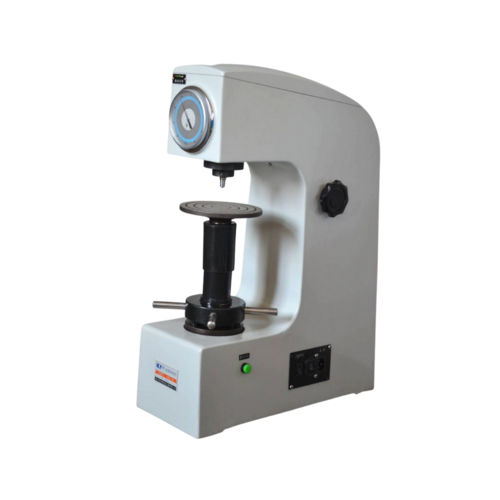
Electric Superficial Rockwell Hardness Testing Machine
Application:
Determine the superficial hardness of ferrous metals, alloy steel, carbide and metal after nitriding, cyanidation, carburizing, electroplating and other surface treatment;
It is suitable for the hardness test of small parts and thin samples.
Main Features:
Manual superficial hardness tester HR45A has stable and reliable performance , it is economical type without electric power supply;
The dial reads the hardness value directly, indicator responses sensitively, show the hardness value accurately, the test value is more accurate than national standard;
Direct dial readings,with scales of HRN,HRT(other Rockwell scale optional) ;
Onetime casted molding shell, stable structure and it is not easy to be out of shape. It can work under harsh environment;
Precision conforms to GB/T230.1/.2 National Standard,ISO 6508-2,ASTM E18.
Specifications:
Measuring range:70-94HR15N, 42-86HR30N,20-77HR45N
67-93HR15T, 29-82HR30T, 10-72HR45T
Test force:147.1, 294.2, 441.3N (15, 30, 45kgf)
Max. height of test piece: 170mm
Depth of throat: 135mm
Hardness resolution: 0.5HRN(T)
Dimensions: 466 x 238 x 630mm
Weight approx.: 65kg
Comprehensive Hardness TestingThe machine offers multiple Rockwell scales (HR15N, HR30N, HR45N, HR15T, HR30T, HR45T), making it versatile for different sample thicknesses and coatings. The electric drive ensures precision and consistency with minimal human intervention, supporting high-throughput industrial testing processes.
Applications Across IndustriesThis superficial Rockwell tester is widely used in automotive, aerospace, metalworking, and research laboratories. It is ideal for testing thin sheets, surface-treated materials, and small parts, ensuring all materials meet stringent quality requirements.
FAQ's of Electric Superficial Rockwell Hardness Testing Machine:
Q: How does the Electric Superficial Rockwell Hardness Testing Machine operate?
A: The machine utilizes an electric drive system to apply precise loads on the test specimen. The measured depth of indentation reflects the material's superficial Rockwell hardness, ensuring minimal operator effort and high repeatability.
Q: What materials can be tested with this hardness testing machine?
A: This device is designed for surface hardness testing of metals, thin sheets, and coated materials, making it suitable for a variety of samples commonly used in industrial and quality assurance settings.
Q: When should I use the superficial Rockwell testing method?
A: Use this method when you need to determine surface or thin layer hardness without affecting deeper layers of the material. It is especially useful for quality control on surface-hardened or coated components.
Q: Where is the Electric Superficial Rockwell Hardness Testing Machine commonly used?
A: It is widely employed in quality control laboratories, manufacturing plants, research facilities, and metal processing industries, especially where thin or surface-treated materials require precise hardness measurement.
Q: What is the process for conducting a hardness test with this machine?
A: First, prepare the surface by cleaning it. Then place the sample on the anvil, select the appropriate test scale, and initiate the test with the electric operation. The machine automatically applies the load and displays the hardness value.
Q: What are the benefits of choosing an electric version of the superficial Rockwell tester?
A: An electric machine offers enhanced precision, consistent loading, rapid operation, and simplified user interaction. These features improve throughput and reduce the potential for human error.
 English
 Spanish
 French
 German
 Italian
 Chinese (Simplified)
 Japanese
 Korean
 Arabic
 Portuguese










 Send Inquiry