Product Description
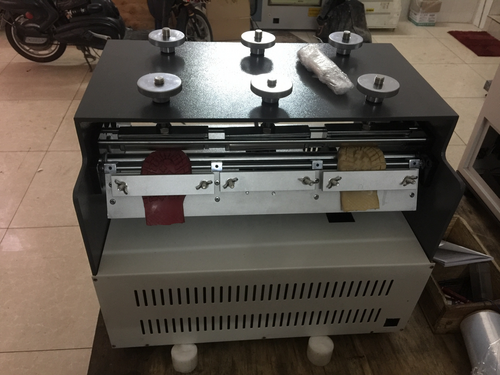
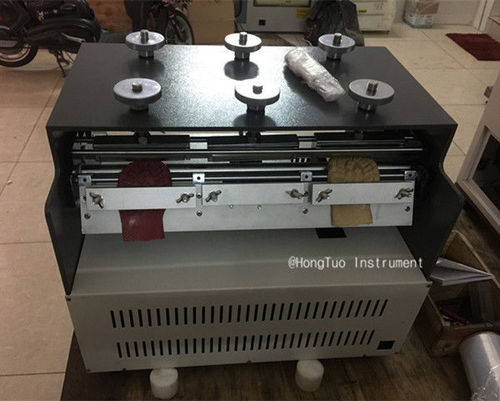
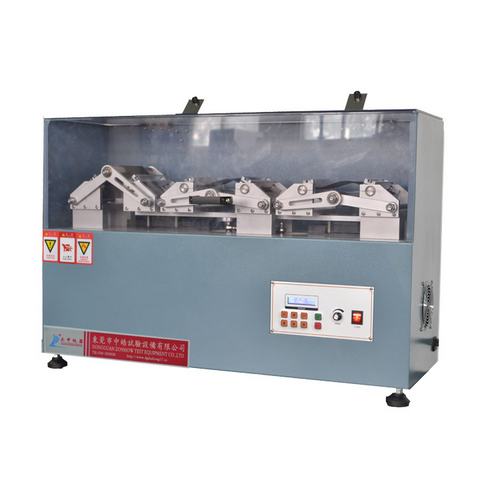
ROSS Leather Flex Tester Rubber Sole Ross Flexing Testing Machine
Application:
This machine is used for the right angle folding test of rubber products, soles, PU and other materials. The test piece is continuously stretched and stretched by the machine. After bending, the damage degree and rupture degree can be examined.
Standards:
ASTM-D1052, ISO-5423, SATRATM60
Specification:
1. Number of test pieces: 6 groups
2. Zigzag angle: Max.90 degree
3. Test speed: 100 times
4. Counter: LCD, 0-999,999
5. Body: (65 * 50 * 60) cm
6. Weight: about 100kg
7. Power: AC220V 3A
Reliable Flex Testing for Diverse MaterialsPurpose-built for determining the flex resistance of rubber, PU soles, leather, and related samples, the ROSS Flex Tester accommodates up to six specimens simultaneously. Its robust construction and advanced features offer users a dependable, streamlined tool for routine quality assessments and research applications in busy lab environments.
User-Friendly and Safe OperationFeaturing a compact design, digital control interface, and a quick clamp system, this machine provides straightforward specimen mounting and intuitive testing operation. Key safety features, such as auto-stop after preset cycles, ensure maximum operator protection and help maintain work efficiency during demanding test routines.
Precision and Efficiency for LaboratoriesWith a sturdy, corrosion-resistant, powder-coated body, digital display, and precise resolution of one cycle, the ROSS Leather Flex Tester delivers consistently accurate data. Immediate response times, low operational noise, and compliance with global testing standards make it the ideal choice for manufacturers, exporters, and quality control labs.
FAQ's of ROSS Leather Flex Tester Rubber Sole Ross Flexing Testing Machine:
Q: How is the ROSS Leather Flex Tester operated during routine testing?
A: Operate the flex tester by securely mounting up to six specimens using the quick clamp system, selecting your preferred control mode (manual or digital timer), setting the desired number of test cycles via the preset digital counter, and activating the electric motor. The machine will automatically stop when the preset cycle count is reached.
Q: What materials and specimen sizes are suitable for this testing machine?
A: This tester is designed to evaluate the flex resistance of rubber, PU outsoles, leathers, and similar materials. It accommodates specimens up to 150 x 30 mm, and supports a range of material hardness for diverse testing scenarios.
Q: When should I use this machine during the product development process?
A: The ROSS Leather Flex Tester is ideally used in both the development and quality assurance phases to assess the durability and flexibility of soles and materials before production, as well as for routine strength verification in finished products.
Q: Where is the ROSS Leather Flex Tester typically installed?
A: Due to its floor-standing design and compact footprint, the tester is best suited for use in laboratory settings, quality control departments, or production facilities requiring reliable flex resistance evaluation.
Q: What is the testing process on this machine and how is accuracy ensured?
A: Insert specimens, set the digital counter for desired cycles (from 0 to 999,999), and start the test. The machine flexes samples at 602 cycles/min with a 401 mm stroke, and auto-stops after completion. Its digital display and 1-cycle accuracy guarantee precise and repeatable results.
Q: How does this flex tester benefit manufacturers and exporters?
A: Manufacturers and exporters benefit from the machine's compliance with ASTM D1052 and ISO 4643, robust construction, reliable digital controls, and ability to expedite testing across different materials, ensuring high product quality and confidence for global distribution.
Q: What are the safety and maintenance features of the machine?
A: The ROSS Flex Tester is equipped with an auto-stop safety device to prevent over-testing, features corrosion-resistant materials, and operates at a low noise level (<65 dB(A)). Regular cleaning and inspection of moving parts are recommended for optimal performance.
 English
 Spanish
 French
 German
 Italian
 Chinese (Simplified)
 Japanese
 Korean
 Arabic
 Portuguese











 Send Inquiry