Product Description
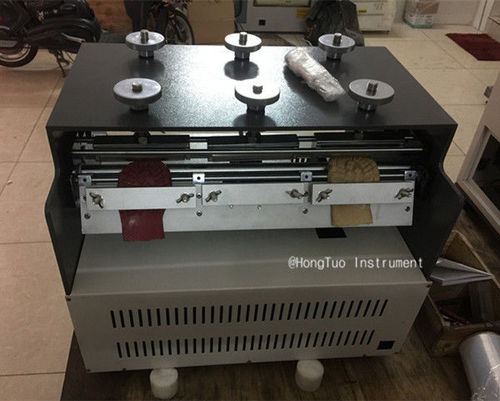
DH-RF D1052 Plastic Testing Machine Ross Shoe Sole Flexing Resistance Tester
Application:
This machine is used for the right angle folding test of rubber products, soles, PU and other materials. The test piece is continuously stretched and stretched by the machine. After bending, the damage degree and rupture degree can be examined.
Standards:
ASTM-D1052, ISO-5423, SATRATM60
Specification:
1. Number of test pieces: 6 groups
2. Zigzag angle: Max.90 degree
3. Test speed: 100 times
4. Counter: LCD, 0-999,999
5. Body: (65*50*60) cm
6. Weight: about 100kg
7. Power: AC220V 3A
Advanced Flexing Resistance TestingThe DH-RF Ross Shoe Sole Flexing Resistance Tester is designed to rigorously test the endurance of shoe soles. By subjecting samples to repeated flexing cycles, the machine simulates real-life conditions and assists manufacturers in assessing product quality. Its semi-automatic operation improves efficiency, while the robust MS construction guarantees a long service life. Accurate hardness measurements ensure samples meet industry standards, making this device essential for laboratories and quality assurance processes.
Versatile Use in Hospitals and LaboratoriesThis tester's design supports a wide range of applications, particularly in hospital and laboratory environments. Its ease of operation and reliable electric power supply reduce downtime, while the machine's weight provides stability during testing. Institutions benefit from the consistent and accurate evaluation of shoe sole durability, aiding in both product development and certification. Exported globally, the DH-RF tester is trusted by traders, distributors, and manufacturers alike.
FAQ's of DH-RF Plastic Test Machine Ross Shoe Sole Flexing Resistance Tester:
Q: How does the DH-RF Plastic Test Machine evaluate shoe sole flexing resistance?
A: The tester bends shoe sole samples repeatedly, simulating the flexing that occurs during actual use. This process helps determine the resistance of soles to cracking or failure over time.
Q: What materials can the tester be used with and why is MS important?
A: The machine is constructed from MS (Mild Steel), ensuring durability and strength during testing. While it is mainly designed for plastic and rubber soles, its robust structure accommodates a variety of materials.
Q: When should laboratories or hospitals use this flexing resistance tester?
A: The tester should be used whenever compliance or quality assessment of shoe sole durability is required, such as during routine quality checks or product development stages in laboratories or hospitals.
Q: Where is the DH-RF Flexing Resistance Tester manufactured and distributed from?
A: This machine is manufactured, distributed, and exported from China, serving both domestic and international markets through various channels, including suppliers, exporters, and traders.
Q: What is the process for using the Ross Shoe Sole Flexing Resistance Tester?
A: Operators place the shoe sole specimen into the machine, adjust the settings, and initiate the flexing cycle. The semi-automatic system then repeatedly flexes the sample, after which the results are analyzed for cracks or wear.
Q: How does automation grade affect the operation of the tester?
A: Being semi-automatic, the operator needs to set up the sample and initiate the cycle, but much of the testing process runs automatically, reducing manual intervention and minimizing potential errors.
Q: What are the main benefits of using the DH-RF Ross Shoe Sole Flexing Resistance Tester?
A: Key benefits include reliable and consistent testing results, improved efficiency in quality assessments, and enhanced product durability analysis, leading to better end-products for consumers.
 English
 Spanish
 French
 German
 Italian
 Chinese (Simplified)
 Japanese
 Korean
 Arabic
 Portuguese










 Send Inquiry