Welcome to Our Company
 English
 Spanish
 French
 German
 Italian
 Chinese (Simplified)
 Japanese
 Korean
 Arabic
 Portuguese
Call Us+8613267004347


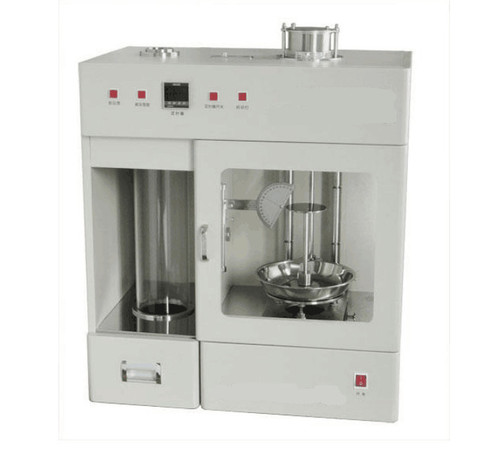
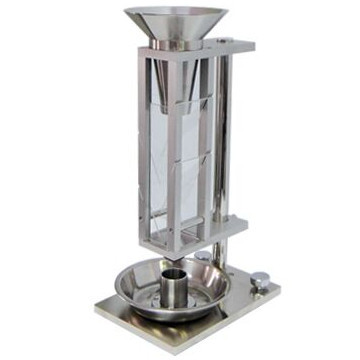
DF-1001 Multi-function Powder Physical Properties Tester , Powder Characteristic Tester / Testing Machine / Equipment / Device / Apparatus
1.Introduction
DF-1001 Powder Comprehensive Characteristic Tester is a test instrument used to evaluate the comprehensive physical properties of powders. Since the powder is in a static state or a flowing state, it is a two-phase system. The characteristics of the particles themselves and the friction between the particles will produce some special flow characteristics. Studying these characteristics is of great significance for the work of powder processing, conveying, packaging and storage. The instrument is characterized by multi-purpose, flexible measurement conditions, easy operation, good repeatability, and suitability for various standards. The successful development of the instrument provides a new means for the evaluation of the comprehensive development of powder comprehensive characteristics in the fields of scientific research and industrial production.
The testing program of this instrument including tap density, bulk density, angle of repose, collapse angle, plate angle, dispersion, etc. Through the above test data, indicators such as difference angle, compression degree, void ratio, uniformity, etc. can be obtained. Through the Carl index, parameters such as the fluidity index and the jet flow index are obtained.
2.Feature
DF-1001 multi-function powder physical property tester is made of 304 stainless steel to prevent the rust of the device from affecting the accuracy of the test. The instrument adds the Hall flow meter function. The tap density vibration amplitude is adjustable from 1mm to 15mm (factory adjustment up to 3mm), the vibration component rotates at a small angle during vibration to ensure uniform material. Three different volume cylinders (100mL50mL25mL) can be used to test different samples. Different test hoppers and measuring cups are available for different test items. The accuracy of each test item is guaranteed.
3.Technical Parameter(Testing program)
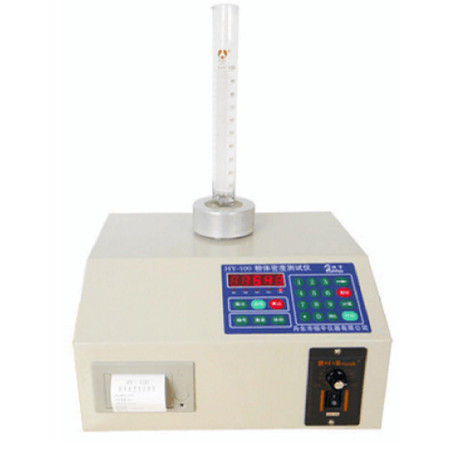
3.1. Tap density
DF-1001 multi-functional powder physical property tester provides the tap density determination method specified in American ASTM D6393-99 standard (Carl index) and national standard (measurement of metal powder tap density) GB/T 5162-2006 / ISO 3953:1993.
The amplitudes 1-15 are arbitrarily adjustable.
3.2. Bulk Density
The DF-1001 Multi-Function Powder Physical Property Tester provides three different standards for measurement:
A) The method for determining the bulk density specified in the ASTM D6393-99 standard (Carl Index);
B) National Standard GB 1479-2010 (metal powder bulk density - funnel method);
C) Method for measuring bulk density specified in GB/T 16913.3-2008 (Determination of bulk density of natural packing method).
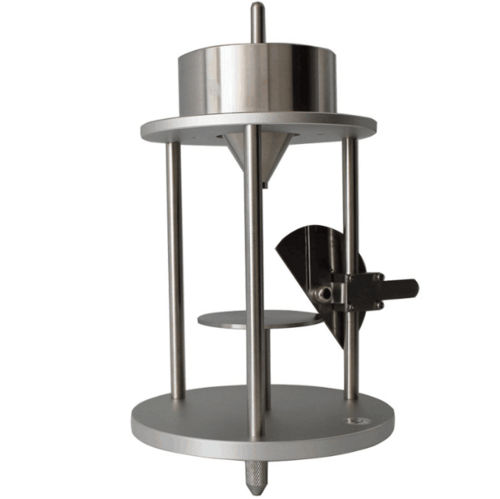
3.3 Angle of repose
The DF-1001 Multi-Function Powder Physical Property Tester provides the measurement method specified in the American ASTM D6393-99 standard (Carl Index).
3.4 Collapse angle
The HYL-1001 Multi-Function Powder Physical Property Tester provides the measurement method specified in the American ASTM D6393-99 standard (Carl Index).
3.5 Flat angle (scraper angle)
The DF-1001 Multi-Function Powder Physical Property Tester provides the measurement method specified in the American ASTM D6393-99 standard (Carl Index).
3.6 Dispersion
The DF-1001 Multi-Function Powder Physical Property Tester provides the measurement method specified in the American ASTM D6393-99 standard (Carl Index).
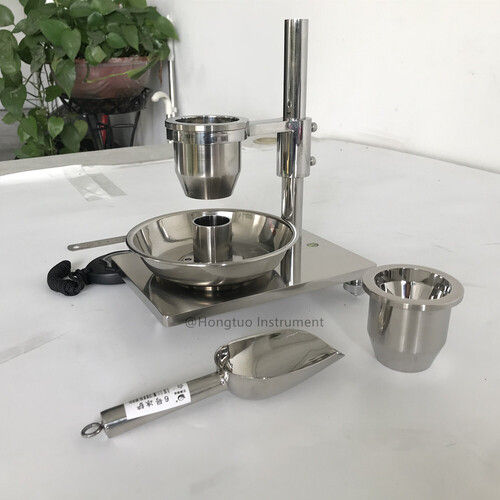
3.7 Hall flow meter
DF-1001 multifunctional powder physical property tester is designed and manufactured according to the national standard GB 1482-84. This device is suitable for measuring the fluidity of metal powders by a standard funnel method. This device can be used for any powder that can flow freely through a standard funnel with a pore size of 2.5 mm.
3.8 Difference angle
The difference between the angle of repose and the angle of collapse is called the difference angle. The larger the difference angle, the stronger the fluidity and jet flowability of the powder.
3.9 Compression
The ratio of the difference between the tap density and the bulk density of the same sample to the tap density is the degree of compression. The degree of compression is also known as the compression ratio. The smaller the degree of compression, the better the fluidity of the powder.
3.10 Void ratio
The void ratio refers to the percentage of voids in the powder as a percentage of the entire volume of the powder. The void ratio varies depending on factors such as the particle shape, the arrangement structure, and the particle diameter of the powder. When the particles are spherical, the powder void ratio is about 40%; when the particles are ultrafine or irregular, the powder void ratio is 70-80% or higher.
3.11 Agglutination degree
The degree of agglutination is the amount of mutual cohesion exhibited by the surface of the powder particles. Generally, the dry powder has a small degree of agglutination.
3.12 Uniformity
It is another form of expression of powder agglutination. When the powder cannot measure the degree of agglutination, the uniformity is used to indicate the amount of cohesive force of the powder.
3.13 Liquidity index
The calculation of the liquidity index was determined by the British Carr in the 1960s. After measuring a large number of powders, he quantified the qualitative concept using a method similar to the integrated grading in fuzzy mathematics. Briefly, the fluidity index is a weighted sum of the term indices of angle of repose, compression, plate angle, uniformity, and agglutination.
3.14 Jet index
It is an indicator to measure the difficulty of dust generation in powder materials, and is also a method to measure the difficulty of liquefaction of powders. The powder with strong jet flow is easy to generate dust and is also easily liquefied. The jet index is a physical index after the four indexes of fluidity index, collapse angle, difference angle and dispersion.

Price:







 Send Inquiry