Product Description
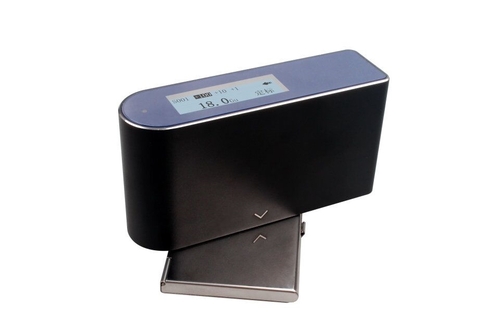
Small Aperture Gloss Meter Gloss Tester for Cambered or Small Parts
Introduction:
DH-WG60G gloss meter is produced according to the national verification regulation of JJG696 standard, adopt long life light source, good repeatability, small volume, high precision and good stability.
It is mainly used on Non-metallic materials like coatings, plastic, printing ink, paint, wood, marble, granite, polishing brick, porcelain, paper, stoving varnish and vitrified polished etc. Metal materials (High gloss materials) like Iron, electroplating, anodizing, copper, stainless, mirror etc.
Measuring Application:
60 degree test angle for normal gloss, from 0-2000 Gu.
Small aperture 4*2mm is suitable flat or Cambered /Arc/ Small surface.like egg, ball, Pipe, hardware parts etc.
Advantages:
(1) High accurate and consistent capacity;
(2) Automatic measure, Statistical Mode, Tolerance determination, manually entering standard samples gloss data;
(3) Humanized design, good man-machine communication interface;
(4) Store 500 groups records;
(5)PC software support, can output many kinds of format of report, data transmission etc.
Specification:
Model: DH-WG60G
Measurement Range: 0-2000Gu
Application: Apply on paint, ink, stoving varnish, coating, wood products; Marble, granite, vitrified polished tile, pottery brick and porcelain; Plastic, printing, paper; Other metallic material.
Instrument Dimensions: 122*34*60mm
Projection Angle: 60 degree
Measuring Spot: (ellipse: long axis*minor axis) 3mm*1mm
Measuring Mode: Automatic measurement/ manual measurement/single measurement/average measurement and cross measurement for a variety of combination measuring mode
Standard Sample Setting: Manually setting/bring out stored data for setting/manually setting tolerance
Data Storage: 500 groups
set standard sample in any stored data, user-define the tolerance range
Language: Chinese/English
Output: connect the micro printer to realize real-time output of measured data
Division Value: 0.1Gu
Repeatability: 0.2Gu
Reproducibility: 0.4Gu
Indication Error: 1.0Gu
International Standard 60 degree: ISO-2813, ASTM-C584, ASTM-D523, DIN-67530, ASTM-D2457, JND-A60, JND-P60
National Standard 60 degree: GB 9754, GB 9966, GB 8807
Standard Accessories: Power adapter/user manual/warranty certification/standard board/software GlossW
Optional Accessories: micro-printer
Precision Measurement for Complex SurfacesTailored for gloss assessment on cambered or intricate-shaped components, this meter's small aperture and portable design allow it to effectively measure areas that larger instruments cannot reach. It offers high accuracy and fast response times, ensuring reliable data for quality control in automotive, electronics, and finishing industries.
Flexible Calibration and Ample StorageWith automatic or manual calibration options including a calibration tile, the meter ensures measurement consistency. Store up to 1,000 readings, making it a practical choice for batch testing or continuous quality evaluation. USB compatibility streamlines data transfer and reporting for efficient workflow.
User-Friendly Operation and Robust PerformanceHandheld, lightweight, and powered by a rechargeable lithium battery, the gloss meter supports up to 48 hours of operation. Its instant measurement and simple controls make it suitable for on-site testing or laboratory analysis. Operating between 10C and 40C in up to 85% RH environments, it withstands diverse field conditions.
FAQ's of Small Aperture Gloss Meter Gloss Tester for Cambered or Small Parts:
Q: How does the Small Aperture Gloss Meter measure the gloss of curved or small parts?
A: The device uses a narrow aperture (1.5mm x 4mm, with optional sizes) and a 60 incidence angle to target small or cambered surfaces. Its design allows precise alignment for accurate measurement, supported by a silicon photodiode detector and LED light source.
Q: What standards does the gloss meter comply with, and why is this important?
A: It meets ASTM D523, ISO 2813, and GB/T 9754 standards, ensuring internationally recognized accuracy and consistency in gloss measurement. Compliance makes it suitable for professional and industrial applications or regulatory environments.
Q: When should calibration be performed, and what options are available?
A: Calibration is recommended before initial use or periodically during extended testing sessions to maintain accuracy. The meter offers both automatic and manual calibration, with a dedicated calibration tile included for easy adjustment.
Q: Where can I use this gloss tester, and in which environments does it work best?
A: Suitable for both portable and laboratory use, it operates efficiently within 10C-40C and up to 85% relative humidity. Its compact size and battery-powered operation allow usage in manufacturing plants, workshops, or on-site inspections.
Q: What is the process for taking a reading with the device?
A: Place the meter's aperture over the specimen (minimum size: 7x10mm), select manual control, and trigger the test. The gloss value appears instantly (<1 second) on the LCD display. You can store readings or export them via USB.
Q: How can stored data be accessed or transferred from the meter?
A: The device allows storage of up to 1,000 measurements. Data can be conveniently transferred to a computer or other devices via its USB output, enabling record-keeping, reporting, and further analysis.
Q: What are the benefits of using a small aperture gloss meter for cambered parts?
A: It provides accurate, repeatable measurements on surfaces that would be difficult to assess with standard-sized instruments. Its combination of portability, rapid response, and compliance with key standards makes it invaluable for quality control of specialized parts.
 English
 Spanish
 French
 German
 Italian
 Chinese (Simplified)
 Japanese
 Korean
 Arabic
 Portuguese











 Send Inquiry