Product Description
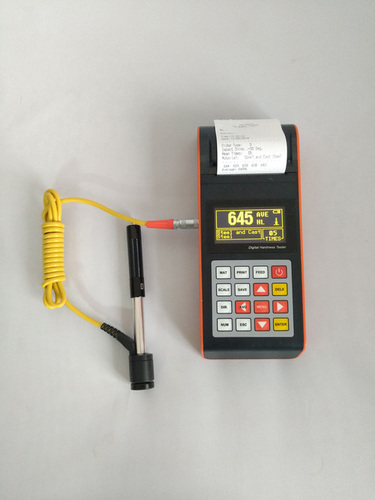
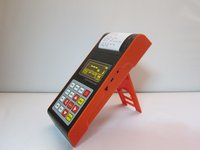
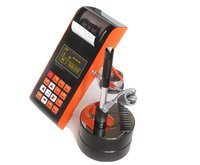
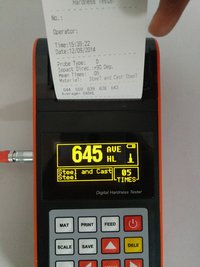
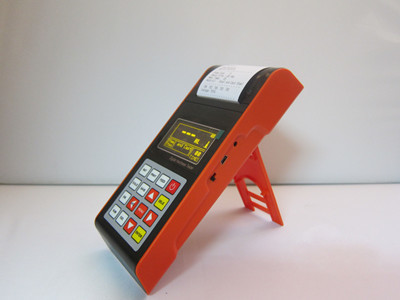
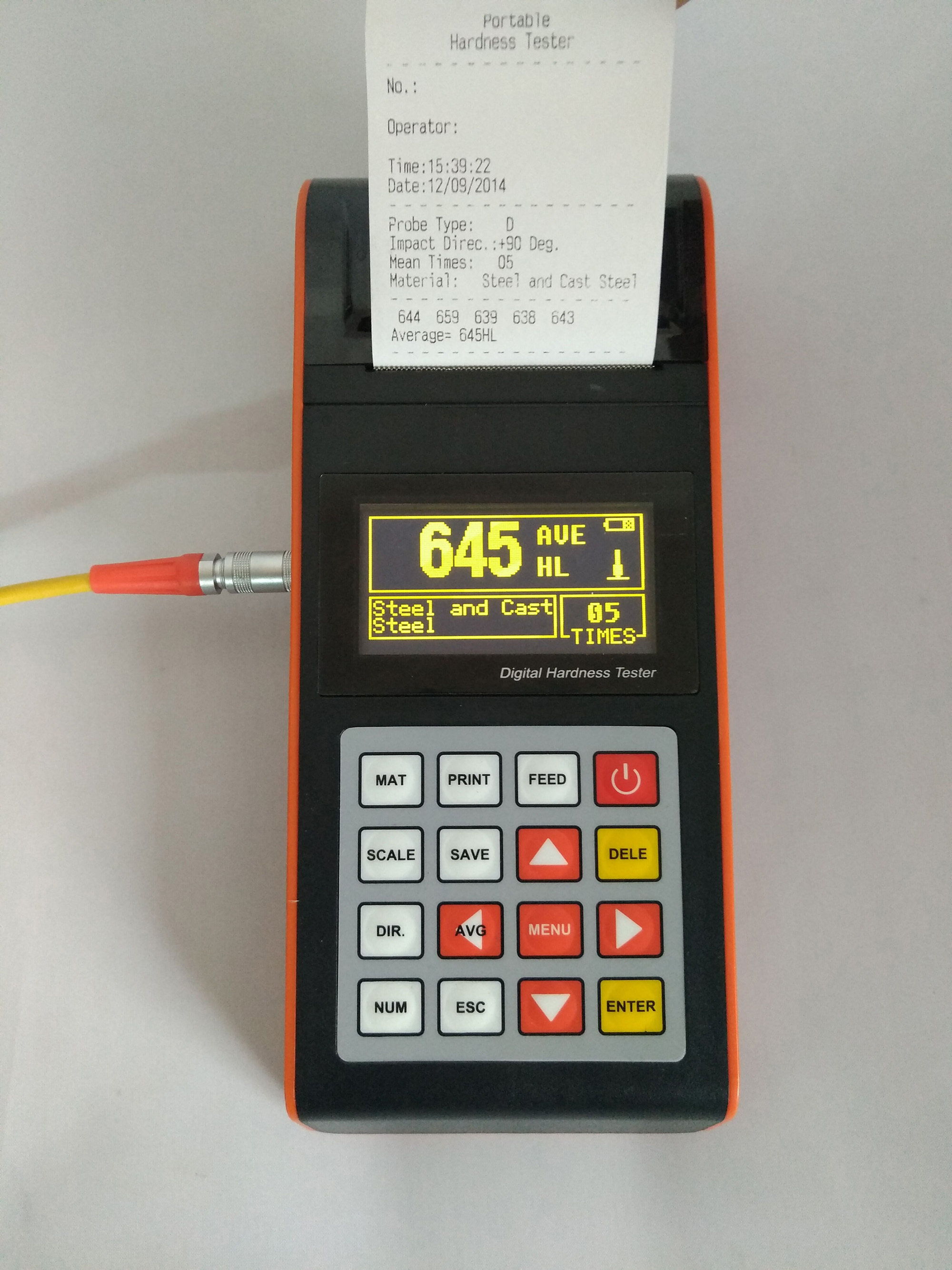
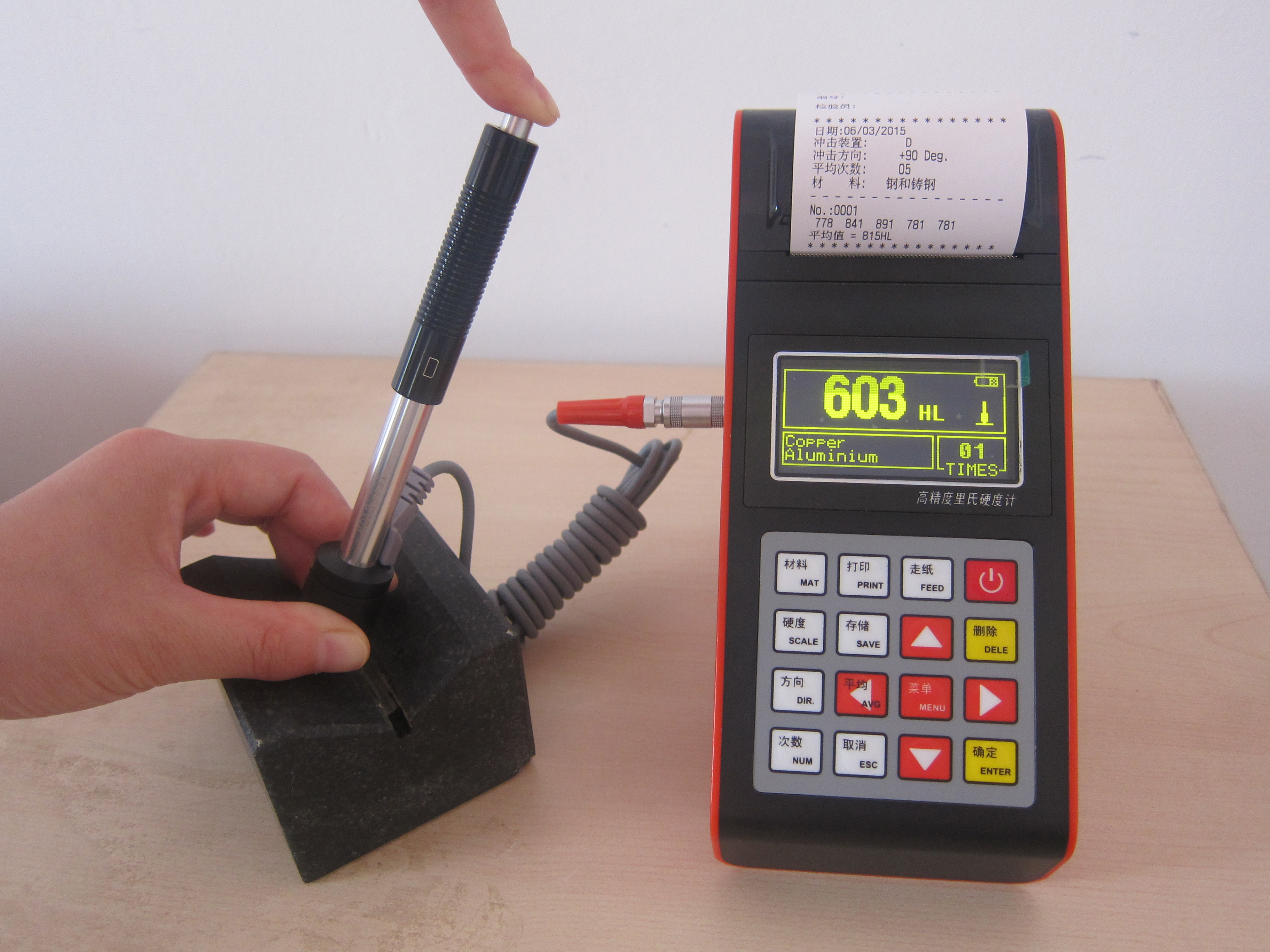
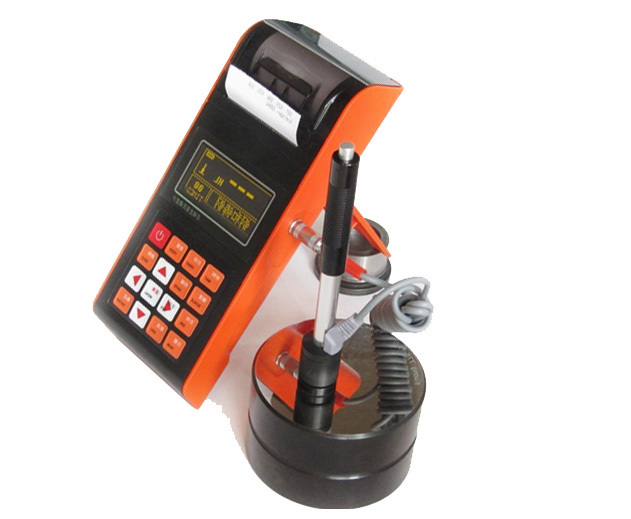
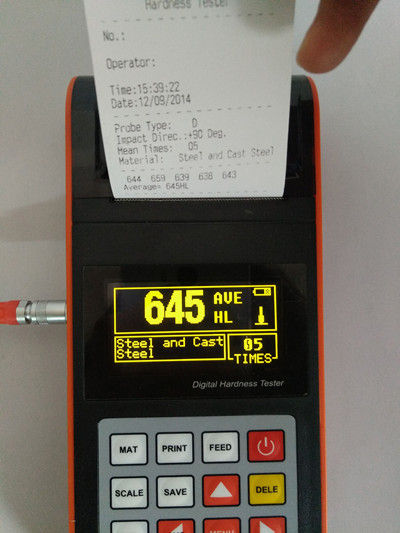
Portable Hardness Measurement Hardness Testing Device
Product Application:
It is suitable for Steel and cast steel, alloy steel, stainless steel, gray cast iron, nodular cast iron, cast aluminum alloy, copper zinc alloy (brass), copper alloy (bronze), tin pure copper, forging steel etc.
Feature:
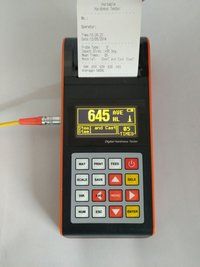
*Built-in printer, can print testing results any time;
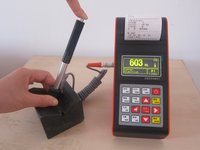
*Test at any angle, even upside down;
*Has a starting value calibration function, ensure the data is applicable and accurate in different codes and standards;
*Seven impact devices are available for special application. Automatically identify the type of impact devices;
*User calibration function;
*Battery information indicates the rest capacity of the battery and the charge status;
*Has the function of automatic alarm. Pre-set tolerance limit, beyond the range has automatic alarm, especially suitable for batch testing;
*Menu operation, information rich, intuitive, the realization of arbitrary switching material and hardness of system's key type, simple and convenient;
*Excellent after-sale service system for high quality products-two years warranty and all life maintenance. Easy to operate;
*Narrow space also available to use;
*Support OEM Service;
*High price performance.
Specification:
- Measuring Materials: Steel and cast steel, alloy tool steel, stainless steel, gray cast iron, nodular cast iron, cast aluminum alloy, copper zinc alloys (brass), copper and tin alloy, copper (bronze), forged steel
- Measuring Range: HLD(170-960), HRC(17.9-69.5), HB(19-683), HV(80-1042), HS(30.6-102.6), HRA(59.1-88),
- HRB(13.5-101.7)
- Measuring Direction: 360 degree
- Hardness Scale: HL, HB, HRB, HRC, HRA, HV, HS
- Display: 128*64 digital matrix LCD
- Data Memory: Max 600 groups (relative to impact times 1-32 adjustable)
- Power: Rechargeable li-battery
- Working Temperature: -20-55 degree
- Size: 210*85*45mm
- Weight: 0.6kg
Versatile Hardness Testing for Multiple ApplicationsThe portable tester is engineered for diverse hardness measurement needs, supporting materials like steel, brass, and aluminum across industrial sites or laboratories. With selectable impact devices, it accommodates distinct specimen types, while offering both manual and automatic control modes.
Advanced Features for Enhanced UsabilityThis device combines user-friendly operation with a high-visibility backlit LCD, robust memory for 2000 data groups, auto power-off, and audible alarms. Its IP54 dust and water resistance allows for performance in challenging environments, and the factory or user calibration options maintain optimal accuracy.
Efficient Data Handling and CompatibilityData transfer is streamlined via USB, Bluetooth, or wireless, and the device is compatible with Windows software for seamless analysis and reporting. Its multilingual support caters to global users, making it ideal for manufacturers, exporters, and quality assurance professionals.
FAQ's of Portable Hardness Measurement Hardness Testing Device:
Q: How does the portable hardness testing device measure metal hardness?
A: The device uses an impact probe (Type D standard, with optional C/G/DL) to perform Leeb hardness measurements on the metal surface. It can convert readings into various scales such as HL, HRC, HB, HV, HRB, and HS, accommodating different testing standards and requirements.
Q: What materials and sample sizes can be tested with this device?
A: It supports a range of metals, including steel, alloy steel, stainless steel, grey cast iron, spheroidal iron, cast aluminum alloys, brass, bronze, and copper. Minimum specimen size is 10 x 10 x 3 mm (customizable), with effectively unlimited test width and height, dependent on specimen and probe.
Q: When should calibration be performed and how is it done?
A: The device arrives factory-calibrated, but user calibration can be carried out as needed to maintain accuracy, particularly after extended use or when switching to different impact devices. Calibration adjustments can be performed via the device interface following the user manual guidelines.
Q: Where is this hardness tester typically used?
A: Its portable, robust design makes it suitable for use in the field, workshops, laboratories, and manufacturing areas. The IP54 protection ensures reliable operation even in dusty or damp conditions, making it versatile for various environments and quality control tasks.
Q: What is the data output process and how can stored measurements be accessed?
A: Test data can be exported via USB, Bluetooth, or wireless connection, and is compatible with Windows-based data analysis software. With storage space for 2000 measurements, users can review, transfer, and generate reports efficiently.
Q: How long does the battery last, and what are the power options?
A: The rechargeable lithium-ion battery provides up to 16 hours of continuous operation. The device can also be powered through USB, making it adaptable for extended use without worrying about frequent recharging.
Q: What are the main benefits of using this portable hardness tester?
A: Key advantages include fast and accurate measurement (response in 2 seconds), lightweight portability (5 kg), multi-language support, user-friendly functions like backlight and data storage, and adaptability to a wide range of materials and testing environments.
 English
 Spanish
 French
 German
 Italian
 Chinese (Simplified)
 Japanese
 Korean
 Arabic
 Portuguese











 Send Inquiry