Product Description
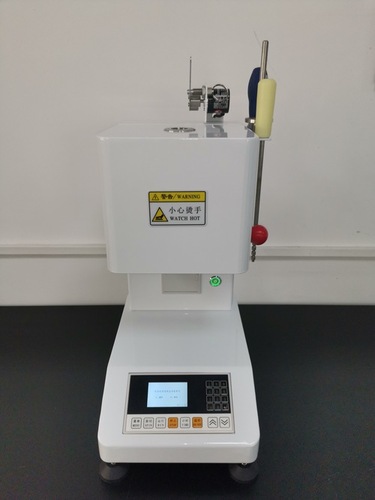
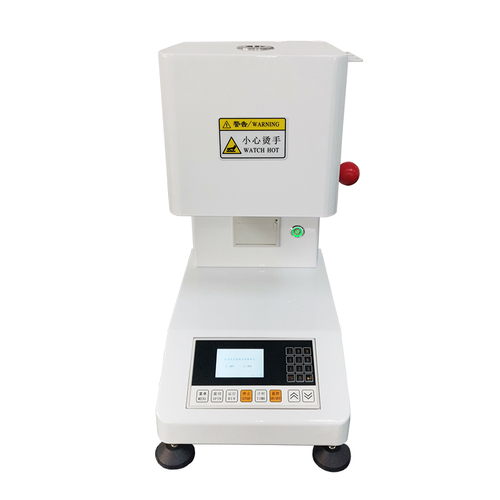
Plastic Melting Flow Index Testing Machine
The melt flow rate meter is a special instrument for determining the melt flow rate of a thermoplastic under certain conditions. It refers to a molten material extruded from a die of a specified length and diameter under a certain temperature and load. Mass flow rate MFR or melt volume flow rate MVR, which can distinguish the viscous flow characteristics of thermoplastics in molten state; it is of great significance for the quality assurance of thermoplastics and chemical fiber raw materials, products, etc., especially in quality. Inspection and warehousing testing.
This series of melt indexer is specially designed for fast and accurate measurement. It has the characteristics of firm structure, easy operation, stable and reliable performance. It uses high-precision PID thermostat technology, high temperature control precision, nitriding of key parts, high strength and hardness. The thermal expansion deformation is small. DH-MI-BP,DH-MI-VP is a regular model, manual loading weight with automatic cutting function.
Usage:
It is used to determine the melt mass rate flow rate MFR value or melt volume rate flow rate MVR value of various plastics and resin polymers in the viscous flow state. It is suitable for polycarbonate, polyarylsulfone,fluoroplastics and nylon which has higher melting temperature.It is also suitable for polyethylene (PE), polystyrene (PS), polypropylene (PP), ABS resin, polyoxymethylene (POM), and polycarbonate (PC) resins.which has lower melting temperatures
Remarks: Testing fluorine material is optional
Application industry:
Plastics industry; rubber industry; metrological quality inspection; colleges and universities; research institutes; commodity inspection and arbitration, technical supervision departments; petrochemicals; electrical appliances; composite materials;and other industries.
Main Features:
- Easy to understand measurement steps
- Stable and reliable, long life
- PID temperature control, fast heating rate, high temperature accuracy
- Better temperature stability and uniformity
- After the filler, it can quickly restore the constant temperature state
- Multilingual application,features for different country uses
- With automatic cutting device, you can set the cutting time at will.
- With a printer, the test results are automatically printed out.
- RS232 interface, can directly connect to the computer to output data
- After the measurement is completed, the measurement data can be automatically printed out.
- The average number can be read automatically by the DE-120 densimeter (optional)
Advanced Digital Control for Accurate TestingEquipped with digital temperature control and a pre-set timer, the machine allows precise adjustment and monitoring of testing conditions. The LCD display delivers real-time results, ensuring high accuracy (0.01 g) and a rapid response time of 2 seconds. Users benefit from intuitive push-button operation and optional RS232 interface for streamlined data management.
Robust Construction and Safety FeaturesThe machine boasts hardened steel and carbide components for enhanced durability. Safety is prioritized with built-in interlocks and heat insulation. The compact, table-top design, complemented by natural air cooling, facilitates easy installation and operation in various laboratory and production settings.
Complete Calibration and Accessory PackageStandard with each unit are essential accessories, including standard die, piston, cleaning tools, sample charger, and a calibration kit with weights. This comprehensive suite supports immediate, reliable operation and maintains precise test standards as per ASTM D1238.
FAQs of Plastic Melting Flow Index Testing Machine:
Q: How is the melt flow index test conducted using this machine?
A: The testing process involves loading thermoplastic granules into the chamber, presetting the temperature through the digital control (ambient to 400C), and applying piston load. The material extrudes through a carbide die, with results measured on the digital LCD as per ASTM D1238 protocols. The process can be controlled manually or automatically, with timing handled via the pre-set digital timer.
Q: What are the benefits of using a stainless steel piston and carbide die?
A: Stainless steel pistons offer resistance to corrosion and wear, while carbide dies ensure longevity and consistent test results. These materials guarantee precise measurements over extended use and minimize maintenance requirements, enhancing reliability for routine or intensive laboratory operations.
Q: When should the calibration kit and standard weights be used?
A: The calibration kit and standard weights should be used before initiating routine testing or after any adjustments to ensure measurement accuracy. Regular calibration maintains the machines compliance with ASTM D1238 standards and ensures result reproducibility across tests and materials.
Q: Where can this melting flow index testing machine be installed?
A: Its compact table-top design and 230 V AC power supply make it suitable for installation in laboratory, quality control, research, and production environments. The powder-coated mild steel body ensures durability for industrial, distributor, and academic settings alike.
Q: What safety features are included in the machine?
A: Safety is assured through robust safety interlocks, heat insulation around the heater, and a natural air cooling system. These features collectively protect users from accidental burns, electrical faults, and operational hazards during the testing process.
Q: How does the device benefit routine polymer quality assessment?
A: With rapid digital measurement, adjustable parameters, and precise repeatability, the machine delivers reliable melt flow index data essential for polymer development, quality control, and compliance with international standards. The digital output and accessory support streamline workflows for analysts and manufacturers.
 English
 Spanish
 French
 German
 Italian
 Chinese (Simplified)
 Japanese
 Korean
 Arabic
 Portuguese










 Send Inquiry