Product Description
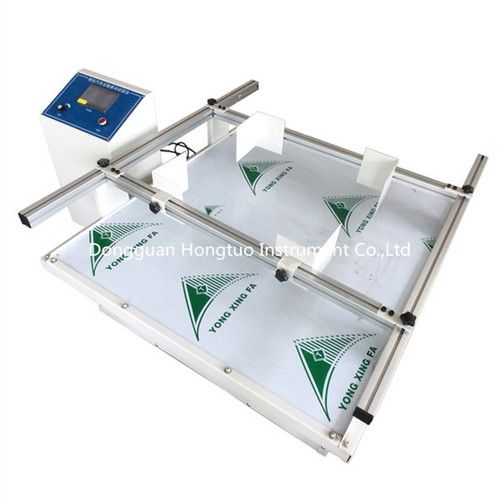
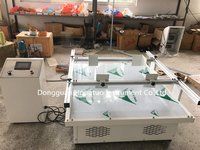
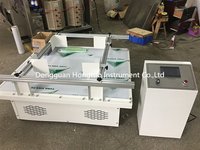
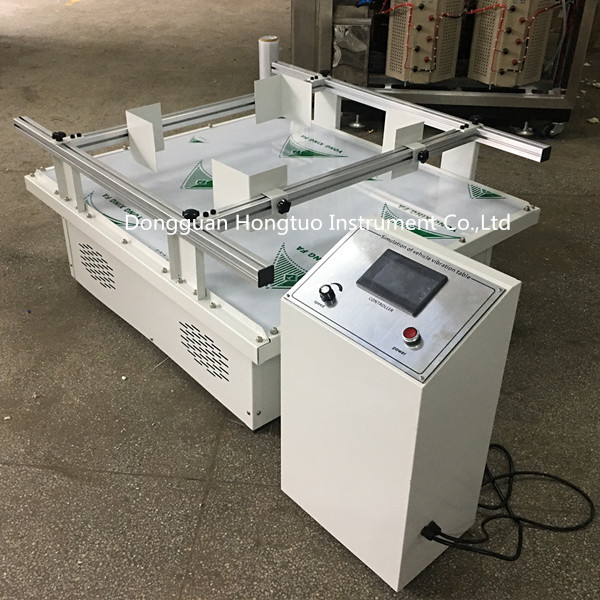
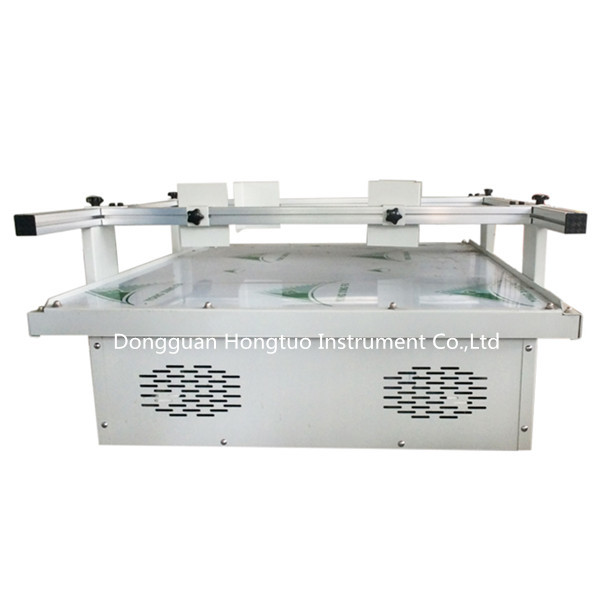
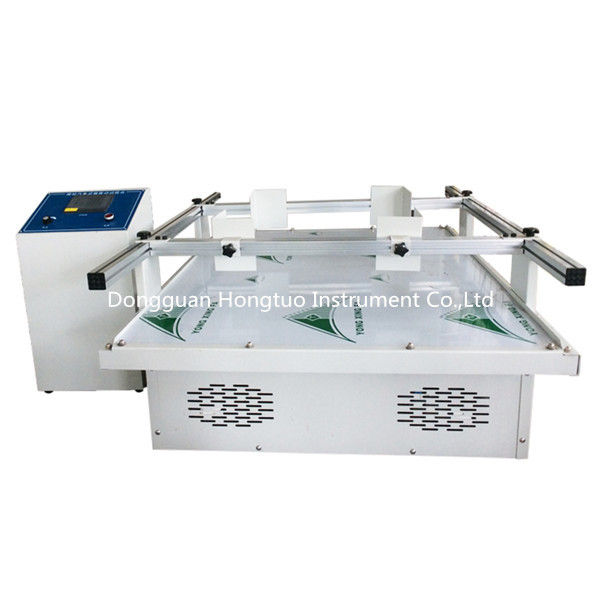
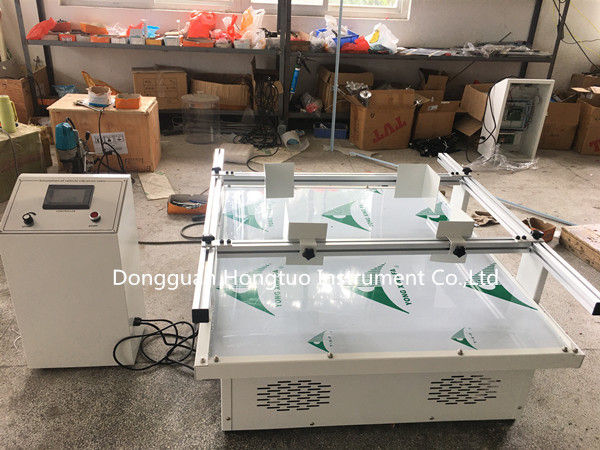
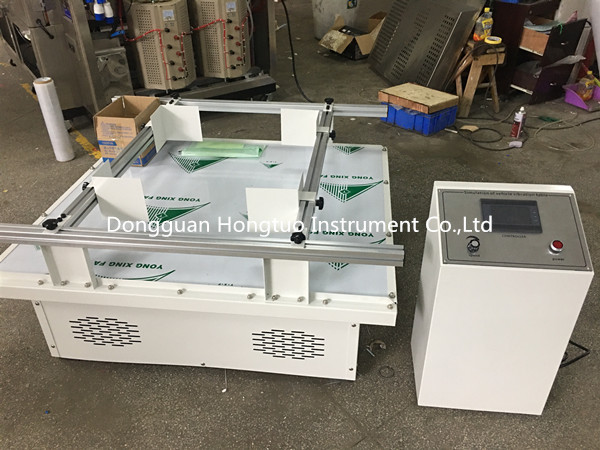
High Frequency Simulated Transportation Vibration Table Machine
Application:
The car simulation transport vibration table is a weapon to improve your high-quality field. It simulates the various vibration environments encountered in the manufacturing, assembly, transportation and use of new products to determine whether the product can withstand environmental vibration. . Applicable to the research, development, quality control and manufacturing of electronics, electromechanical, optoelectronics, automobiles, toys, packaging all other industries.
It is an indispensable test instrument for improving product quality. The simulated transport vibration table is mainly used to simulate the collision of goods and articles produced by the product in the car trunk when the vehicle encounters different road conditions such as bumps, uphills, downhills, corners, etc. Collision, extrusion of items and articles, etc., cause damage to the product, thereby further improving the quality of the article and the quality of the package. In order to obtain the basis for the assessment of the packaging of the articles and articles by obtaining the influence of the actual working conditions on the articles in the laboratory.
Features:
1. competitive price
2. the digital screen dispaly the vibration frenquency
3. use rail track for the installation of the test sample, oprate easily and safely
4. the pedestal of the machine applies heavy style channel with vibration attenuation pad, convenient, stable,no need to install the land-end screw.
5. Silent, can be used in office buildings, laboratories
Standards:
EN ANSI, UL, ASTM, ISTA international transportation standards
Synchronous noise suppression belt drive, the noise is extremely low
The sample is clamped by guide rail, which is convenient and safe to operate
The base of the machine adopts heavy duty channel steel with vibration-damping rubber pad, which is easy to install and runs smoothly, without the need to install anchor screws
DC motor speed regulation, smooth operation and strong load capacity
Rotary vibration (commonly known as horse race) conforms to European and American transportation standards
Specification:
- Vibration mode:Rotary (horse race)
- Vibration frequency:100 300rpm
- Simulated speed:25-80km/h
- Maximum load:100kg
- amplitude:25.4mm
- Effective work surface size:1200x1000mm
- Motor Power:1HP (0.75kw)
- Table size:1200 1000 650 (mm)
- Timer:9999M
- Machine weight:180kg
- Display frequency accuracy:1rpm
- power supply:AC220V 10A
Advanced Simulation for Packaging Quality AssuranceDesigned to simulate real-world transportation vibrations, this vibration table is vital for assessing packaging strength and protecting products throughout their supply chain journey. The system accurately reproduces sine wave vibration, enabling reliable analysis of packaging integrity during movement. Its programmable settings and digital controls support a wide range of test scenarios, from routine validation to advanced R&D, helping prevent transit damage and ensuring that packaging designs meet industry regulations and customer expectations.
Easy Operation and Real-Time MonitoringThis vibration table offers user-friendly operation via a digital touchscreen or push-button interface, and parameters such as frequency, amplitude, and duration are effortlessly adjustable. An emergency stop button and circuit breaker provide reliable safety. Real-time monitoring, programmable controls, and accurate measurements (resolution: 0.01 mm, accuracy: 0.1 mm) enable precise, repeatable testing, while USB/RS232 data export streamlines record-keeping for audits or quality control purposes.
FAQ's of High Frequency Simulated Transportation Vibration Table Machine:
Q: How does the High Frequency Simulated Transportation Vibration Table Machine work?
A: This machine simulates the vibrations experienced during product transportation by generating adjustable sine wave vibrations on a high-strength steel platform. This allows you to test and analyze the durability and reliability of packaging under real transportation conditions.
Q: What types of packaging and products can be tested on this vibration table?
A: Specimens of various sizes can be tested, depending on the platform (standard size: 1000 mm x 1200 mm) and maximum load capacity (200 kg). This includes transport packaging, shipping cartons, crates, or any product requiring evaluation of resistance to shipping-related vibrations.
Q: When should I use transportation vibration simulation tests during the product lifecycle?
A: Such tests are best conducted during the packaging design phase, quality control assessments, or prior to large-scale shipment, ensuring products and packaging meet safety and durability standards before entering the supply chain.
Q: Where should the vibration table be installed for optimal operation?
A: It should be floor-mounted in a controlled laboratory, packaging test center, or manufacturing facility on level ground. The ambient operating conditions should range between 0~40C temperature and 20-80% relative humidity for optimal performance.
Q: What is the process for setting up a test on this vibration table?
A: Place the specimen securely on the anti-slip platform, select and set desired test parameters-frequency (5-60 Hz), amplitude (0.5-6 mm), speed (60-300 rpm), and duration (up to 99 hours)-using the touchscreen or push-button interface, then initiate the test. Real-time adjustments and emergency stop features are available for safety.
Q: How does this machine benefit product manufacturers and packaging designers?
A: By accurately replicating transportation conditions, the machine helps manufacturers and designers identify packaging weaknesses, improve product safety, reduce damage claims, and meet international compliance standards, ensuring their goods reach customers intact.
Q: What standards and safety features does the equipment comply with?
A: The machine adheres to ASTM, ISTA, ISO, and GB/T transportation simulation standards. Safety is ensured with an emergency stop button, circuit breaker, overload protection, and real-time monitoring mechanisms.
 English
 Spanish
 French
 German
 Italian
 Chinese (Simplified)
 Japanese
 Korean
 Arabic
 Portuguese










 Send Inquiry