Product Description
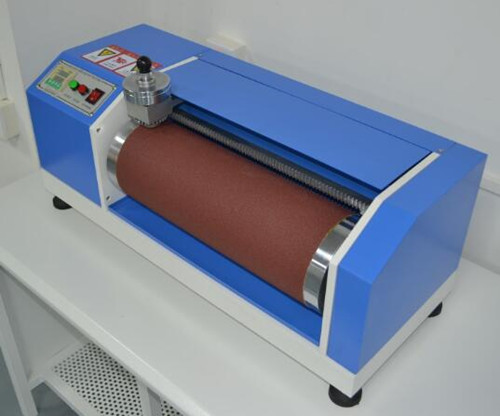
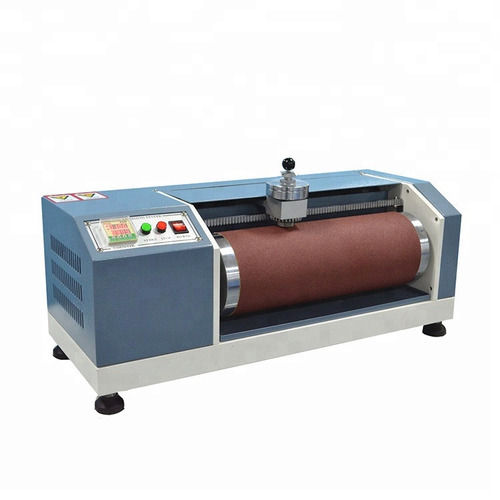
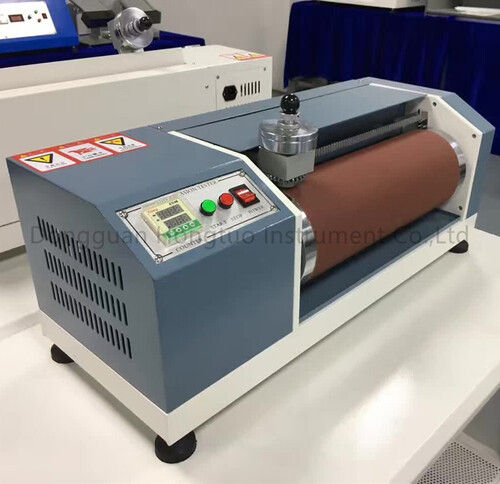
DIN Rubber Abrasion Resistance Tester
Application
Suitable to determine the wear resistance of elastic material, rubber, tires,conveyor belts,shoe soles, soft synthetic leather and other materials.
Standards
DIN-53516,ISO/DIS-4649,GB-9867
Principle
Under a predetermined contact pressure and a given area,the specimen with sandpaper angled to measure abrasion resistance of the specimen subjected to rubbing on a certain level of sandpaper, sandpaper affixed to the surface of the drum, samples pressed on a drum with sandpaper, and the specimen along the roller to the lateral movement, abrasion resistance is produced at one end of the cylindrical specimen, tests the value of the mass loss of the specimen, by the density of the specimen to calculate the amount of volume abrasion.
Specifications
- Roller diameter:150mm
- Roller length:460mm
- Rotate speed:40rpm
- Abrasion stroke:40mm(20mm)
- Abrasion speed:0.32m/sec
- Dip angle:3 degree
- Specimen diameter:16 mm
- Thickness:6 -15 mm
- Testing load:5N,10N
- Clamp horizontal displacement:4.2mm/roll each lap
- Standard accessories:one set of sampler,two pieces of abrasive
Precision and ComplianceOur DIN Rubber Abrasion Resistance Tester guarantees high precision in wear and abrasion evaluation for various rubber and plastic samples. Designed to meet DIN 53516 and ISO 4649 standards, it supports accurate measurements with digital display and instant response, enabling effective quality control for manufacturers, exporters, and researchers.
Effortless Operation and SafetyFeaturing manual and digital control modes, rotary fixture clamping, and a built-in working lamp, operation is both straightforward and secure. The device includes a protective cover to safeguard operators and offers low-noise functionality, enhancing user comfort during prolonged testing sessions.
Durability and VersatilityFinished with anti-corrosive powder coating and built on a robust bench-top design, the tester thrives in laboratory or industrial environments. Its versatility enables testing of a wide array of rubber compounds and plastic, providing reliable results to distributors, traders, and manufacturers across the sector.
FAQs of DIN Rubber Abrasion Resistance Tester:
Q: How do I mount a specimen on the DIN Rubber Abrasion Resistance Tester?
A: Specimens are easily mounted using the rotary fixture clamping system, ensuring secure and precise positioning for accurate abrasion measurement throughout each test cycle.
Q: What standards does this tester comply with for abrasion resistance testing?
A: The equipment is compliant with DIN 53516 and ISO 4649 standards, making it suitable for internationally recognized reliability in rubber and plastic abrasion resistance testing.
Q: When should I use this tester during product development?
A: It is recommended to utilize the tester during the quality control phase and material evaluation stage to verify the abrasion resistance of rubber or plastic samples before mass production or export.
Q: Where is the ideal setting for installing the abrasion resistance tester?
A: The bench-top mounting and compact design make it suitable for laboratory environments, quality assurance departments in manufacturing plants, and research facilities that require accurate abrasion testing.
Q: What is the process for performing an abrasion resistance test on this machine?
A: Place the sample in the rotary fixture, select the desired test settings (manual or digital mode), and initiate the test. The machine uses a reciprocating linear movement of the abrasive paper against the sample, recording volume loss digitally.
Q: How does using this tester benefit manufacturers and exporters?
A: Manufacturers and exporters gain precise abrasion resistance data for their products, supporting compliance with international standards while ensuring consistent quality and competitive advantage in the market.
Q: Can the machine accommodate various rubber hardness levels?
A: Yes, the tester is designed to evaluate rubber samples with hardness ratings up to 100 IRHD, providing versatility for testing a broad spectrum of rubber materials.
 English
 Spanish
 French
 German
 Italian
 Chinese (Simplified)
 Japanese
 Korean
 Arabic
 Portuguese










 Send Inquiry