Product Description
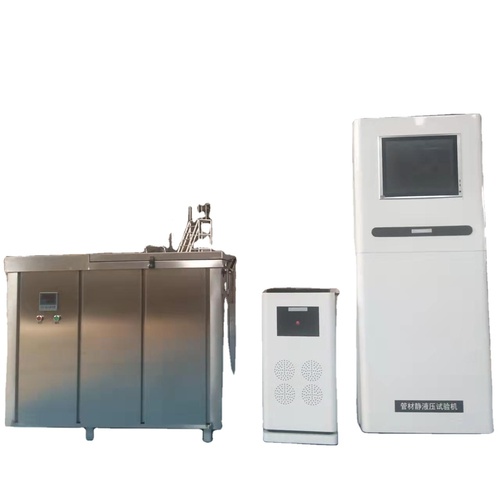
Pipe Hydrostatic Pressure Tester Pipe Pressure Burst Test Machine
Model: ZXGY-10B-3
Description:
The testing machine system is used to maintain the pipe or pipe fittings in a certain pressure range for long-term internal pressure test, in the test pipe or pipe fittings ruptured or completed automatically stop, and can save the pressure curve and print the test report. In terms of control: Fill pressure and pressure relief by filling pressure and discharge pressure solenoid valve open to execute, steady pressure mainly through the control of filling pressure and discharge pressure solenoid valve point move open to achieve the effect of precise control, this machine has the automatic constant voltage, electric pressure relief, cleaning, and the function of automatic calibration, the equipment is imported from the other electromagnetic valve, unique sealing structure, when the water clean, To ensure the sealing and durability of the solenoid valve, is a kind of economic and practical, functional variety, high degree of automation testing machine.
The instrument is widely used in various plastic pipe internal pressure test, suitable for building materials industry, pipe production units, national testing departments and scientific research units.
Standard:
GB/T 6111-2003 Test method for damage resistance time of thermoplastic pipe under long-term constant internal pressure
GB/T 15560-1995 Test method for hydraulic instantaneous blasting and pressure resistance of plastic pipes for fluid transport
Advanced Safety and AutomationEquipped with automatic shut-off and overpressure alarms, this pressure tester safeguards both operators and test specimens. The microprocessor/PLC-based control system automates test sequences, streamlining pressure, burst, and rapid pressure increase tests, while leak detection and programmable timers enhance test customization and reliability.
Comprehensive Data ManagementThe built-in memory, with USB export capability, allows for comprehensive storage of test results. Operators can analyze and generate detailed reports using the included PC software. Real-time monitoring on a digital LCD ensures immediate feedback, improving accuracy and decision-making during every testing cycle.
Versatile Application RangeDesigned to accommodate various pipe materials-including uPVC, HDPE, PPR, and composite pipes-with diameters from 16mm to 315mm, this equipment supports up to three simultaneous tests. Adjustable test speeds, widths, and strokes provide flexibility for different standards, making it suitable for diverse quality control environments.
FAQ's of Pipe Hydrostatic Pressure Tester Pipe Pressure Burst Test Machine:
Q: How does the safety mechanism work during pipe testing?
A: The tester features automatic shut-off and alarm functions that activate if overpressure or leaks are detected, ensuring safe operation for users and preventing damage to test specimens.
Q: What types of pipes and fluids are supported by this pressure testing machine?
A: It is compatible with uPVC, HDPE, PPR, and composite pipes using either water or any compatible hydraulic fluid as the testing medium.
Q: When can the machine be used for multiple pipes at once?
A: The tester is designed to accommodate simultaneous testing of 1 to 3 specimens, which is useful for comparative quality assessment or increased laboratory throughput.
Q: Where can the collected test data be accessed and analyzed?
A: Test data is stored in the internal memory and can be downloaded via USB. The included PC software allows users to analyze information and generate standardized reports for documentation or compliance.
Q: What are the primary benefits of the PLC-based automatic control system?
A: The microprocessor/PLC-based control ensures precise test execution, real-time monitoring, and customizable test parameters, reducing the chance of operator error and increasing workflow efficiency.
Q: How is the machine installed and what are its basic requirements?
A: This equipment is floor-mounted and requires a 220V AC, 50/60 Hz power supply. No special cooling is necessary, and it operates efficiently within 10C - 40C and 10% - 90% humidity (non-condensing).
 English
 Spanish
 French
 German
 Italian
 Chinese (Simplified)
 Japanese
 Korean
 Arabic
 Portuguese










 Send Inquiry