Product Description
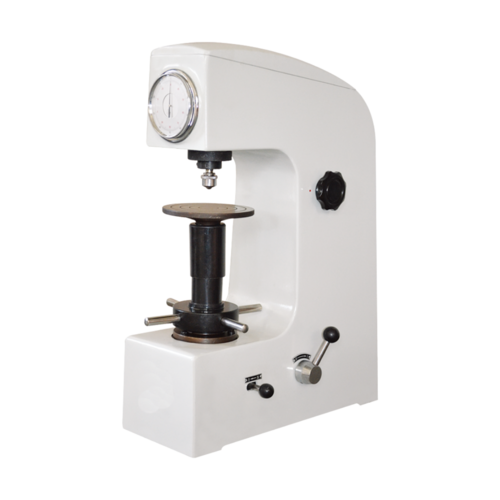
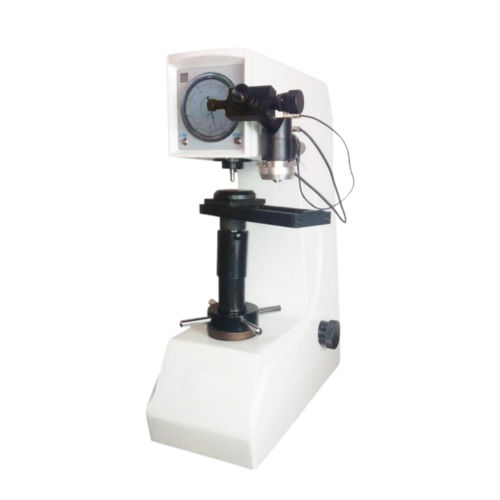
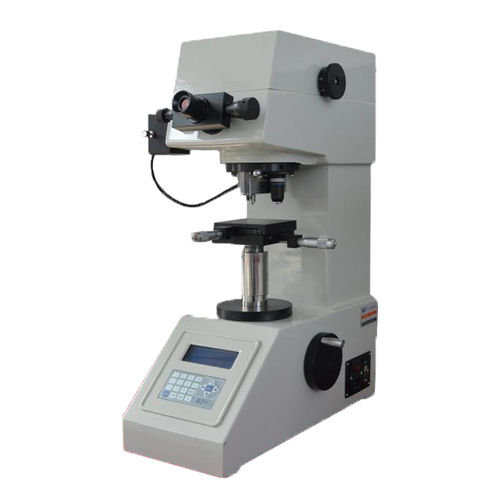
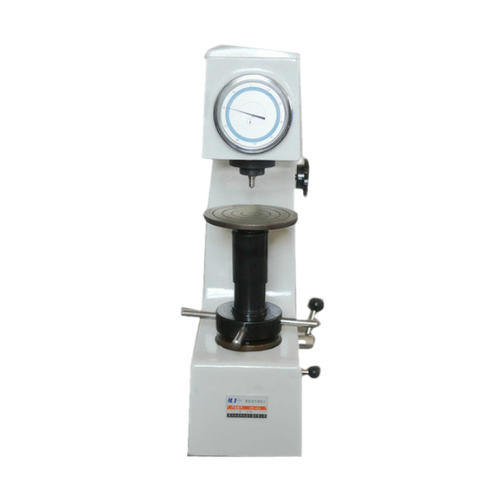
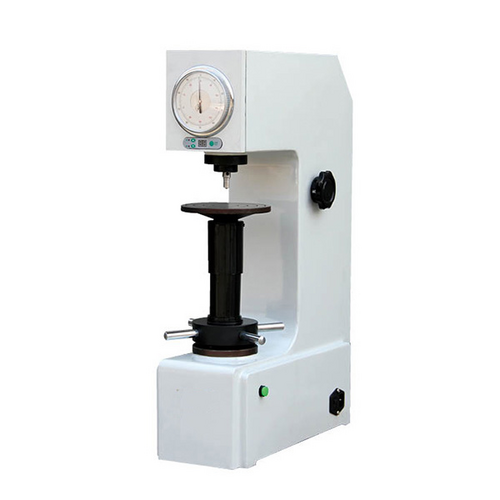
Manual Operation Plastic Rockwell Hardness Tester
Main Feature:
Lever loading, manual operation, accurate and durable, high measurement efficiency; the dial directly reads HRE, HRL, HRM, HRR scale accuracy in line with JB/T7409.
Application:
Determination of the hardness of plastics, composite materials and friction materials and soft metal, non-metallic materials.
Main Technical Specifications:
Measuring range: 70-100HRE, 50-115HRL, 50-115HRM, 50-115RR
Test force: 588.4, 980.7, 1417N (60, 100, 150kgf)
Maximum allowable height of the sample: 170mm;
Distance from the center of the indenter to the machine wall: 135mm;
Hardness resolution: 0.5HR;
Dimensions: 466x238x630mm;
Weight: about 65kg
Versatile Hardness Testing Across MaterialsThis Plastic Rockwell Hardness Tester offers broad applicability over a range of plastic and composite materials, including certain soft metals and non-metallic substances. It features multiple Rockwell scales, allowing precise measurements for various sample types. The device is ideal for both research institutions and industrial production settings that demand accurate hardness evaluations.
Reliable Manual OperationEngineered for manual control, this hardness tester does not require electricity or advanced interfaces, which minimizes maintenance and downtimes. Its straightforward operation ensures consistent and repeatable results, making it a dependable solution for on-demand hardness measurements in diverse environments.
Ideal for Quality Control and ResearchWidely supplied by manufacturers, exporters, and distributors in China, this tester is essential for quality assurance in plastics processing, composites manufacturing, or friction material evaluations. Its precision and durability ensure dependable service, supporting effective material selection and product development initiatives.
FAQ's of Manual Operation Plastic Rockwell Hardness Tester:
Q: How is the Manual Operation Plastic Rockwell Hardness Tester used to determine the hardness of plastics?
A: To use the tester, a sample is placed onto the anvil, and a specific load is manually applied according to the appropriate Rockwell scale (HRE, HRL, HRM, or RR). The resulting hardness value is then read directly from the dial indicator, allowing quick and reliable assessment of the plastic's hardness.
Q: What materials can be tested with this hardness tester?
A: The device is suitable for determining the hardness of plastics, composite materials, friction materials, soft metals, and other non-metallic materials within the specified test ranges. It is ideal for quality control of a variety of engineered and industrial materials.
Q: When should I use each Rockwell scale provided on this tester?
A: The correct Rockwell scale (HRE, HRL, HRM, or RR) depends on the material type and hardness range you wish to measure. Refer to material testing standards or product documentation to choose the scale that best matches your sample's properties.
Q: Where is the Manual Operation Plastic Rockwell Hardness Tester commonly utilized?
A: This instrument is widely used in laboratories, production floors, research facilities, and quality control departments, particularly in industries handling plastics, composites, friction materials, and soft metals.
Q: What is the typical process for conducting a test with this hardness tester?
A: The typical process involves preparing a clean, flat testing surface, positioning the sample, selecting the appropriate indenter and load, and then manually applying the test force. Once stabilized, the hardness reading is recorded from the display.
Q: What benefits does manual operation offer compared to digital hardness testers?
A: Manual operation offers straightforward use, enhanced durability, reduced need for power or electronic maintenance, and can provide reliable, repeatable results in environments where digital equipment may not be practical.
 English
 Spanish
 French
 German
 Italian
 Chinese (Simplified)
 Japanese
 Korean
 Arabic
 Portuguese









 Send Inquiry