Product Description
Digital Micro Vicker Hardness Tester Price
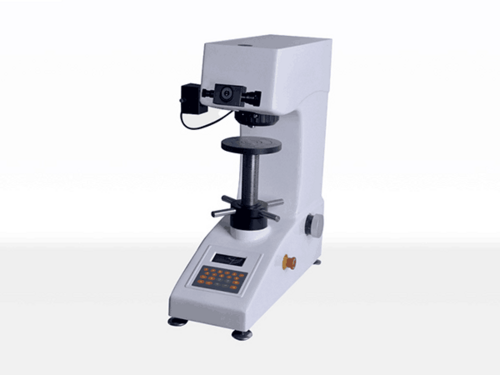
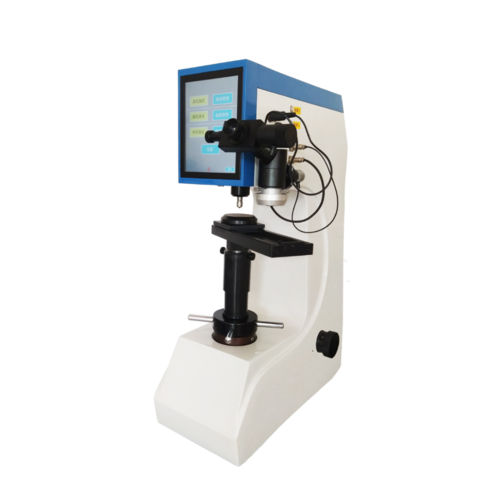
It is a high and new technology product of optical-mechanical integration. The hardness tester has novel shape, good reliability, operability and repeatability. It is an ideal product for vickers hardness testing.This machine uses computer software programming, optical measurement system.Through the soft key input, can choose vickers and Knop hardness measurement, can adjust the strength of the measurement light source, can choose the retention time, can display the test method and test force on the LCD screen, through the panel input measurement indentation diagonal length, the screen directly read hardness value, easy to look up the table cumbersome.Easy to use, high measurement accuracy.
Function and characteristic:
1. The optical system designed by senior optical engineers not only has clear images, but also can be used as a simple microscope, with adjustable brightness, comfortable vision, and not easy to fatigue after long-term operation;
2. The industrial display screen can directly display the hardness value, convert the hardness, test method, test force, holding time, measurement times, and the test process is intuitive and clear;
3. The cast aluminum shell is formed at one time, the structure is stable and does not deform, the car paint grade is high, the scratch resistance is strong, and it is still bright as new after years of use;
4. Our company has the ability to research, develop, design, produce and process by ourselves, and provide parts replacement and maintenance upgrade services for our machines for life;
5. HV-10Z model can realize: the position switch of observation-test-measurement is completed by automatic turret
Main Use and Application Scope:
1, iron and steel, non-ferrous metals, metal foil, hard alloy, metal sheet, microstructure
2, carburizing, nitriding and decarburizing layer, surface hardening layer, electroplating layer, coating
3, glass, wafer, ceramic materials, carbonization;
Versatile Test Range for Comprehensive AnalysisWith an extensive hardness test range from HV0.3 to HV10.0, this digital micro Vickers tester caters to diverse material assessment needs. Its automated turret system ensures efficient switching between objectives, facilitating precise and repeatable results for various research, production, or quality-control purposes.
User-Friendly, Automated OperationEquipped with an automatic turret, the micro Vickers hardness tester minimizes manual intervention, ensuring ease of use. Operators benefit from digital controls and intuitive operation, enabling both novice and experienced users to perform hardness testing with consistent accuracy and speed.
Compact Design for Flexible InstallationMeasuring just 585200630 mm and weighing 42 kg, this tester offers a compact design ideal for space-conscious labs or workshops. Its robust build quality further ensures installation flexibility and durability for daily usage across multiple industries.
FAQ's of Digital Micro Vicker Hardness Tester Price:
Q: How does the automatic turret function enhance the Vickers hardness testing process?
A: The automatic turret allows for seamless shifting between different objective lenses and indenters, reducing manual handling and minimizing operator error. This automation facilitates a quicker, more efficient testing process and ensures consistent and precise positioning for accurate hardness readings.
Q: What types of materials can be tested within the HV0.3 to HV10.0 range on this Vickers hardness tester?
A: This Micro Vickers Hardness Tester is suitable for a broad spectrum of materials, including metals, ceramics, and composites, particularly those with thin coatings or small specimens. The wide test range allows for flexible application across different industry needs.
Q: Where is this digital micro Vickers hardness tester typically used?
A: It is widely utilized in metallurgical laboratories, manufacturing quality control, research institutes, and industrial production lines. Its automated features and test range make it ideal for facilities demanding high-precision material hardness analysis.
Q: What is the procedure for conducting a hardness test using this equipment?
A: To perform a test, a sample is placed on the stage, and the automated turret positions the selected indenter. After setting test parameters via the digital interface, the device applies load to create an indentation. The built-in optics and measurement software analyze the impression, delivering hardness results efficiently.
Q: What are the benefits of selecting a supplier or manufacturer in China for this tester?
A: Chinese suppliers, manufacturers, and traders often offer competitive pricing, robust distribution channels, and extensive support. This ensures not only cost-effective procurement but also reliable after-sales service and technical assistance.
Q: When is it advisable to use a micro Vickers hardness tester over other types?
A: This tester is ideal for applications requiring precise measurement on small, thin, or delicate material samples. Its digital controls and automatic functionality make it preferable when repeatable, high-resolution hardness testing is essential.
 English
 Spanish
 French
 German
 Italian
 Chinese (Simplified)
 Japanese
 Korean
 Arabic
 Portuguese










 Send Inquiry