Product Description
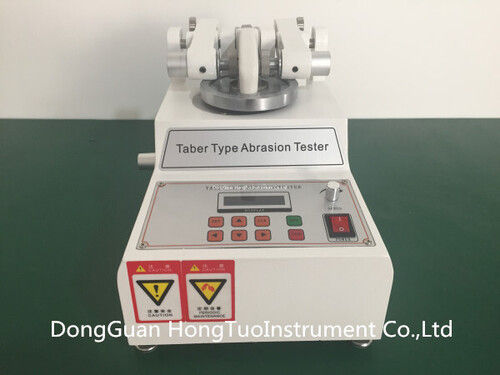
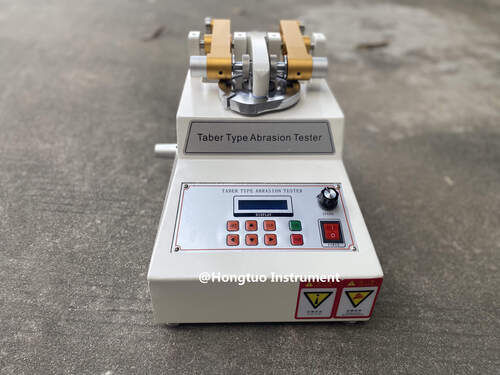
Taber Wear Abrasion Tester Taber Rotary Abrasion Tester
Application:
This machine is applicable to measuring for leather,fabric,coating,paper,floor
tile,plywood,glass,natural rubber.,etc.By using the specified grinding wheel,and loading the weight on the specimen which cut by knife.setting up the rolling times.then taking out the specimen,observe the status of the specimen after doing abrasion.or calculate the different weight for the specimen before testing and after testing to get the abrasion indexer.which equals to the abrasion loss weight/rolling times X 1000 the specified model of grinding wheel.H18,H22, CS10,CS17,CS32,CS33.
It can be used for measuring Travel suitcases, carpets, cardboard, clothing, glass, plastic coatings, tiles, metal coatings, paints, varnishes, decorative sheets, high-pressure sheets, plastics, textiles, resilient floor mats, traffic paints, anodized layers, blankets, electronic components, Decorative panels, waxes, labels, holsters, dental materials, automotive interiors, resins, furniture, etc.
Standards:
DIN53754,53799,53109,52347,TAPPI T476, ASTM D3884,ASTM-D1044,ISO 54701ASTM D 1175ASTM-D 3389, ASTM D 4060,GB/T5478-2008,GB/T1768-2006
Specification:
1.Testing sheet:inner diameter(D)3mm
2.Abrasion wheel:2"(Max.45mm)(W)1/2"
3.Centre interval for abrasion wheel :63.5mm
4.Interval for abrasion wheel and testing sheet:37-38mm
5.Rotating speed:60-72r/min(can be adjustable)
6.Load:250,500,750g
7.Counter:LED 0-999,9999
8.Distance from testing sheet to suction inlet:3mm
9.Dimension:45 * 35 * 42cm
10.Weight:30kg
11.Power supply:AC 220V,10A
12.One pair of imported grinding wheel H-18;One set of cleaner
Advanced Rotational Abrasion TestingThe Taber Rotary Abrasion Tester features a 100 mm rotary table and selectable abrasive wheels for comprehensive wear resistance assessment. Its robust digital controls and programmable cycle count support detailed analysis suited for research and quality control laboratories.
Flexible Specimen HandlingDesigned for versatile specimen mounting, the adjustable holder and clamping system accommodate samples up to 100 mm in diameter. The device can test single or dual specimens, enabling comparative performance studies and maximized throughput.
Reliable Safety and User ProtectionUser safety is prioritized with an emergency stop button, transparent safety shield, and sturdy construction. These features protect operators during testing while providing visible access to specimens, enhancing both safety and workflow efficiency.
FAQs of Taber Wear Abrasion Tester Taber Rotary Abrasion Tester:
Q: How does the Taber Wear Abrasion Tester determine wear resistance on various materials?
A: The tester uses a rotary abrasion method with selected abrader wheels to systematically wear the samples surface. The digital cycle counter tracks the number of rotations, facilitating precise evaluation of wear resistance according to international standards.
Q: What types of samples can be tested and what specimen sizes does the device support?
A: It accommodates coatings, paper, textiles, plastics, leather, ceramics, glass, and similar substrates. The standard specimen size is 100 mm diameter, with adjustable clamping to ensure secure mounting for accurate results.
Q: When should the emergency stop and safety guard features be used?
A: The emergency stop should be activated immediately if any abnormality or risk is detected during operation. The safety shield offers continuous protection against debris, making it essential to keep in place whenever the machine is running.
Q: Where can data from the Taber Abrasion Tester be monitored or exported?
A: Test results are displayed on the integrated LCD digital panel. With the optional USB/Data Output interface, users can transfer cycle counts and test data directly to a computer or laboratory management system for documentation and analysis.
Q: What is the process for starting and running a wear resistance test on this machine?
A: Mount the specimen securely on the rotary table, select the appropriate abrader wheels and test speed, program the desired cycle count using the touch panel, and initiate the test. The machine automatically records and displays the results upon completion.
Q: How does this equipment benefit laboratory abrasion testing workflows?
A: The machine offers high accuracy (1%), intuitive operation, instant digital feedback, and robust construction. These qualities ensure consistent and repeatable testing while enhancing workflow efficiency and data reliability for various laboratory needs.
 English
 Spanish
 French
 German
 Italian
 Chinese (Simplified)
 Japanese
 Korean
 Arabic
 Portuguese










 Send Inquiry