Product Description
Features
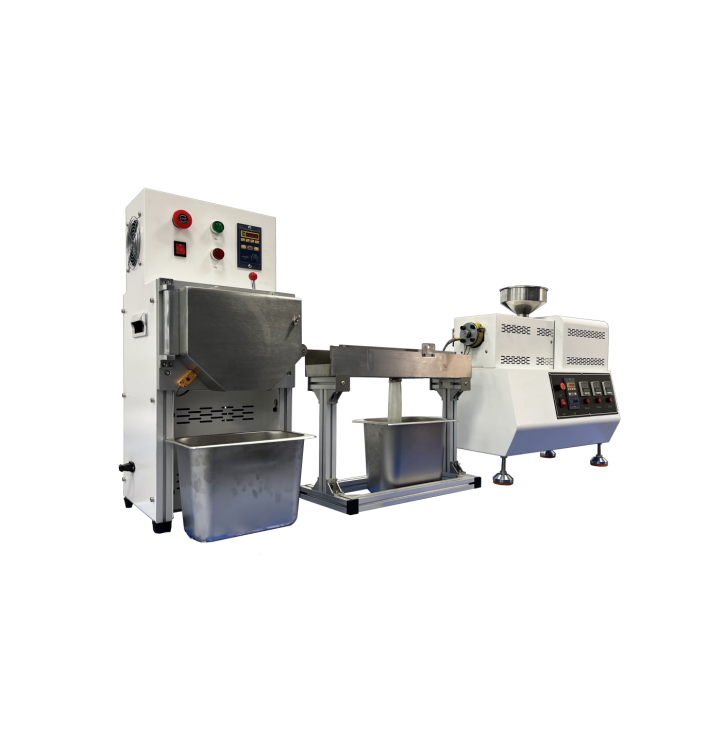
*Product performance of small laboratory twin-screw extruder:
* Professionally manufactured screw and barrel, high processing precision, quality assurance
* Brand motor drive, stable and reliable screw speed control
* Particle size and coarseness can be adjusted. The material is fully plasticized and mixed in the screw. Application scope of small laboratory twin-screw extruder:
* Melting and plasticizing extrusion of materials
* Optimization of extrusion molding process parameters
* Establishment of small experimental lines for film, sheet, pipe, granulation, etc.
Precision Engineering for R&DEngineered specifically for laboratory and pilot-scale polymer extrusion, this tabletop extruder offers researchers exceptional process control and repeatability. The modular design allows quick customization for different polymer blends, while precise digital PID controllers assure stable processing temperatures across three zones. With user-friendly controls and robust safety features, it's an essential tool for development and formulation testing.
Flexible and Efficient OperationThe extruder's interchangeable screw configuration, variable speed, and easy-clean barrel support diverse polymer compounds, from micropellets to strands. Continuous or batch output modes adapt seamlessly to evolving laboratory needs, and the efficient air and water cooling system ensures fast cycle times and reliable operation even at high throughput rates.
FAQ's of Twin Screw Tabletop Laboratory Extruder for Polymer Processing:
Q: How is the extrusion process controlled on this tabletop extruder?
A: The extrusion process is regulated using three independent PID-controlled heating zones, a variable speed drive (0.1-100 rpm), and digital temperature and torque feedback for precise adjustment and monitoring throughout operation.
Q: What types of polymers and specimen formats can be processed?
A: You can process a wide range of thermoplastics and polymer blends in micropellet or strand formats, making the extruder suitable for R&D, formulation testing, and small-scale compounding applications.
Q: When should I use the interchangeable screw feature?
A: Utilize the modular, customizable screw configuration when changing polymer types, altering processing conditions, or testing new formulations, as it enables optimal performance and reduces cross-contamination.
Q: Where can the Twin Screw Tabletop Extruder be installed?
A: Designed as a compact, free-standing tabletop unit, it fits laboratory environments, academic facilities, pilot plants, and R&D centers where space is limited but performance is critical.
Q: What safety features are included for laboratory use?
A: The extruder features built-in over-temperature and overload protection, ensuring safe operation during continuous or batch processing in research environments.
Q: How does the extruder benefit research and development work?
A: Its precise control over key parameters, rapid temperature response, and accurate measurement capabilities enhance repeatability, shorten formulation cycles, and support reliable scale-up studies.
 English
 Spanish
 French
 German
 Italian
 Chinese (Simplified)
 Japanese
 Korean
 Arabic
 Portuguese










 Send Inquiry
