Product Description
Advantage:
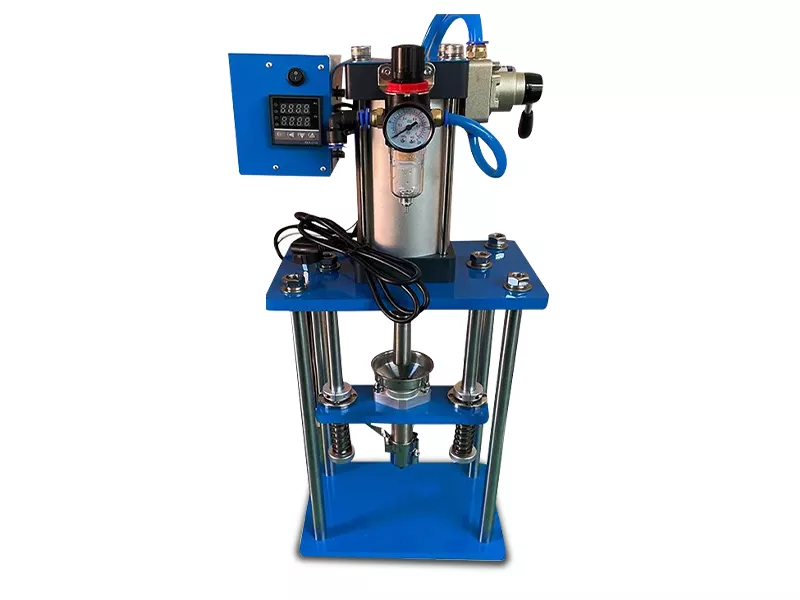
1)Adjust the height of the mold,The mold gate should be about 5mm away from the machine nozzle.lf the mold gate is too high (more than 10mm), it is easy to leak glue.
2)Open the mold after the mold cooling is completed.The factory air pressure is generally adjusted to 0.2mp.
3)The higher the air pressure, the higher the injection pressure.
Parameter:
| Model |
HT-20Z |
| Size |
250*170*880mm |
| Net weight |
16kg |
| Material |
Aluminum alloy+steel |
| Power |
1000W |
| Heating temperature |
1000W |
| Rated voltage |
220V or 110V |
| Maximum extrusion pressure |
800kg |
| Maximum glue injection amount |
20g |
| Temperature control |
PID control through temperature change |
| Maximum allowable atmospheric pressure |
0.8mpa |
| Suitable material |
ABS,PC,PP,PE,PET,PVC,TPU,TPE ect |
| Maximum die size |
140*200*135mm |
Precision Molding for Small PartsThis machine is specifically designed for applications requiring high accuracy in small plastic part production. With a customizable specimen size and shot weight range between 5 and 30 grams, users can create precise components for prototypes, testing, or small batch manufacturing.
Advanced Safety and Control FeaturesEquipped with critical safety functions such as an overpressure safety valve and emergency stop, alongside digital and manual pressure regulation, the machine ensures safe operation. The easily accessible push button controls and digital/analog pressure displays facilitate adjustment and monitoring during each molding cycle.
Versatile and Energy Efficient OperationOperating on a standard 220V AC power supply, this air-driven injection molding machine supports adjustable cycle times and test speeds for multiple resin and mold types. Its air-cooled or optional water-channelled cooling system maintains optimal performance, while its compact 25 kg frame is easy to move and install in laboratory, educational, or small industrial settings.
FAQ's of Small Plastic Injection Molding Machine for Precision Plastic Parts:
Q: How does the manual hopper feed system work on this injection molding machine?
A: The manual hopper feed allows users to load thermoplastic resin directly into the barrel before each molding cycle. This method gives greater control over material selection and prevents waste, making it well suited for prototyping, small batch production, or laboratory settings.
Q: What types of plastic materials are compatible with this machine?
A: This injection molding machine is compatible with a wide variety of small thermoplastics, including ABS, polypropylene (PP), polycarbonate (PC), and nylon. Its barrel heating system can reach up to 300C, accommodating the melting requirements of these materials.
Q: Where is this machine typically used?
A: The machine's compact size and tabletop mounting make it ideal for research & development laboratories, educational institutions, and small-scale prototyping or manufacturing workshops where space is at a premium and precision is required.
Q: What benefits does the integrated heating system provide?
A: The integrated barrel heating system ensures uniform temperature distribution up to 300C, enabling consistent melting of plastic resins. This leads to improved quality of molded parts, reduced cycle times, and minimized production defects.
Q: How is safety ensured during operation?
A: Operator safety is maintained through built-in features such as an overpressure safety valve and an emergency stop button, which provide quick intervention options and protect both the user and the equipment during unforeseen circumstances.
Q: What is the process for adjusting injection volume and cycle times?
A: Injection volume and cycle times are regulated digitally or manually using the pressure regulator and controls on the machine. Users can adjust these parameters to suit the mold and material, optimizing for either speed, material economy, or part quality.
Q: When is this machine particularly beneficial for users?
A: This machine excels when precise control over small molding jobs is needed-such as in prototyping, laboratory testing, small batch production, and educational demonstrations where larger industrial machines would be impractical or unnecessary.
 English
 Spanish
 French
 German
 Italian
 Chinese (Simplified)
 Japanese
 Korean
 Arabic
 Portuguese











 Send Inquiry
