Welcome to Our Company
Call Us
Call Us
+8613267004347
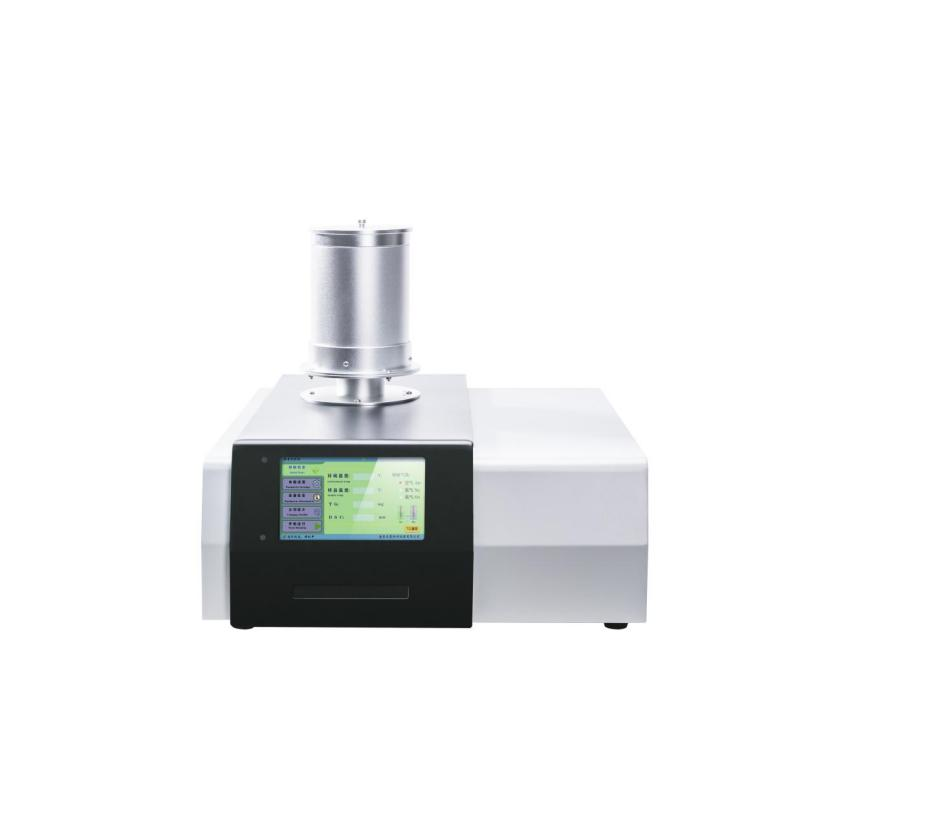
Simultaneous Thermal Analyzer for Material Testing DH-STA 200

Simultaneous Thermal Analyzer for Material Testing DH-STA 200

9120.0 USD ($)/Piece

Product Details:

  • Temperature RT to 1500C Celsius (oC)
  • Test Range 1 mg-5 g
  • Port Size Gas port 3 mm
  • Frequency 50/60 Hz Hertz (HZ)
  • Humidity Up to 95% RH (non-condensing)
  • Operating Voltage 220V 10% Volt (V)
  • Equipment Type Simultaneous Thermal Analyzer
  • Click to view more
X

Simultaneous Thermal Analyzer for Material Testing DH-STA 200 Price And Quantity

  • 1 Piece
  • 9120.0 USD ($)/Piece

Simultaneous Thermal Analyzer for Material Testing DH-STA 200 Product Specifications

  • 5 g Kg
  • 0.01 mg (balance); 0.01C (temperature)
  • USB, LAN, RS232
  • 0.1C %
  • Thermal stability, Decomposition, Phase transition, Material characterization
  • 0.1 to 100 C/min
  • 0.1 MPa mpa
  • Standard Crucible (various sizes available) Millimeter (mm)
  • AC 220V, 50/60Hz
  • 7-inch Touch Screen LCD
  • 1
  • 0-1500C Kelvin (K)
  • <2 s Seconds
  • 320 mm
  • Benchtop
  • TGA/DSC Simultaneous Testing, Touchscreen Operation, Real-Time Data Acquisition
  • Automatic/Manual
  • 220V 10% Volt (V)
  • Laboratory, Material Testing
  • Automatic
  • Simultaneous Thermal Analyzer
  • RT to 1500C Celsius (oC)
  • Gas port 3 mm
  • 50/60 Hz Hertz (HZ)
  • Up to 95% RH (non-condensing)
  • 1 mg-5 g
  • Approx. 25 kg Kilograms (kg)
  • CSV, PDF, proprietary analysis formats
  • Automatic multi-point calibration
  • Alumina/Platinum
  • Forced air or natural cooling selectable
  • 530 x 420 x 320 mm
  • 0.1C/min to 100C/min programmable
  • Interchangeable
  • Over-temperature protection, Automatic shutdown
  • Nitrogen, Air, Argon, CO2 selectable
  • High-precision microbalance
  • 50 mm3 (typical)
  • Windows compatible analysis software

Simultaneous Thermal Analyzer for Material Testing DH-STA 200 Trade Information

  • 300 Piece Per Month
  • 3 Days

Product Description

Introduction:

Synchronous thermal analysis (TG, DSC) is to observe the change of sample mass with temperature or time during the heating process, with the purpose of studying the thermal stability and composition of the material.

Application:

It is widely used in research and development, process optimization and quality control in various fields such as plastics, rubber, coatings, pharmaceuticals, catalysts, inorganic materials, metal materials and composite materials.

Advantage:

1). The furnace heating adopts double-row winding of precious metal alloy wire to reduce interference, high temperature resistance and oxidation resistance

2). The tray sensor has the advantages of wide test range, high temperature resistance, oxidation resistance and corrosion resistance.

3). The weighing system adopts an imported weighing system with high stability and good repeatability.

4). It adopts an upper cover structure for easy operation. It is difficult to move the furnace body to place the sample, which is easy to cause damage to the sample rod.

5). The weighing system is sealed and constant temperature to reduce the impact of temperature difference on the weighing system.

6). The furnace body adopts double-layer insulation with low heat loss

7). The instrument heating adopts PID control with high precision and small pulse.

8). USB two-way communication is adopted between the software and the instrument to fully realize remote operation. The instrument parameters can be set and the operation and stop of the instrument can be carried out through the computer software

9). Multi-stage program setting, multi-stage heating and constant temperature

The software sets the parameters of the instrument and stops the operation of the instrument.

10).7-inch full-color 24-bit touch screen, better human-machine interface. TG calibration can be achieved on the touch screen

Technical Parameters:

1) Temperature range: room temperature 1200

2) Temperature resolution: 0.01

3) Temperature fluctuation: 0.1

4) Heating rate: 0.1100/min

5) Temperature control method: PID algorithm control, heating, constant temperature, cooling

6) Constant temperature time: 0300min arbitrarily set

7) Balance measurement range: 0.01mg3g , can be expanded to 30g

8) Program control, realize multi-stage heating control

9) DSC range: 0600mW

10) DSC resolution: 0.001mW

11) Weighing system accuracy: 0.01mg

12) Constant temperature time: 0300min arbitrarily set

13) Display mode: 24bit color, 7 inches LCD touch screen display

14) Atmosphere device: built-in gas flow meter, including two-way gas switching and flow control

Atmosphere: inert, oxidizing, reducing, static, dynamic

15) Software: intelligent software can automatically record TG curves for data processing and print experimental reports

16) Curve scanning: temperature rise scanning, temperature drop scanning

17) Power supply: The power supply and weighing system have an isolation shield to avoid AC interference, AC220V 50Hz

18) Operating software: can switch to meet the application switching test of differential, differential thermal, thermogravimetric, and synchronous thermal

19) Communication interface: USB communication

20) The instrument LCD screen interface has a temperature multi-point correction function to meet high, medium and low temperatures, three-point correction; no need to connect to a computer for operation, one-click correction

21) The software can open 5 experimental test structures at the same time for comparative analysis


Versatile Testing and Analysis

This analyzer enables simultaneous TGA and DSC testing, offering comprehensive insights into sample behavior under controlled thermal conditions. Researchers can seamlessly analyze phase transitions, decomposition, and thermal stability with programmable heating rates and real-time data acquisition. Interchangeable sample holders and a high-precision balance further enhance testing flexibility.


Precision and Safety at Every Step

Automatic multi-point temperature calibration and a microbalance with 0.01 mg resolution guarantee reliable and reproducible results. Safety comes first, with built-in over-temperature protection and automatic shutdown. The system accommodates forced air or natural cooling, ensuring optimal operation in varying lab environments.


User-Friendly Interface and Flexible Connectivity

A 7-inch touchscreen LCD streamlines operation and monitoring. The analyzer integrates with Windows-based analysis software, supporting USB, LAN, and RS232 interfaces for versatile data management. Outputs are available in multiple formats, facilitating easy sharing, review, and archiving of test results.

FAQ's of Simultaneous Thermal Analyzer for Material Testing:


Q: How does the Simultaneous Thermal Analyzer ensure accurate temperature measurement during tests?

A: The analyzer uses automatic multi-point calibration to maintain precise temperature measurements, with an accuracy of 0.1C and a resolution of 0.01C. This ensures reliable data across a wide temperature range up to 1500C.

Q: What sample sizes and crucible materials can be used with this instrument?

A: The instrument supports maximum sample sizes of 50 mm3, utilizing standard crucibles made from alumina or platinum. Different sizes of crucibles are available to accommodate varying specimen requirements.

Q: When is it necessary to use different atmosphere controls such as nitrogen, air, argon, or CO2?

A: Atmosphere selection depends on the sample and the type of analysis. Nitrogen is frequently used for inert environments, air for oxidative studies, argon for high-purity inert conditions, and CO2 for specific thermal decomposition investigations.

Q: Where is the best setting to install and operate this analyzer?

A: This benchtop instrument is best suited for laboratory environments where stable power (AC 220V, 50/60Hz), controlled humidity (up to 95% RH, non-condensing), and adequate ventilation can be ensured for optimal performance and safety.

Q: How are data and results managed and exported from the device?

A: All test results are saved in real-time, with data outputs available in CSV, PDF, and proprietary analysis formats. Users can transfer data through USB, LAN, or RS232 interfaces and review it using Windows-compatible software.

Q: What is the process for switching between automatic and manual control modes?

A: Users can select between automatic and manual control modes via the touchscreen interface, allowing for either fully automated test sequences or direct, manual adjustments according to experimental needs.

Q: What are the key benefits of using this analyzer for material characterization?

A: Key advantages include simultaneous TGA/DSC measurements, high accuracy and resolution, versatile atmosphere and sample handling, automated safety features, and user-friendly operation-all contributing to efficient, reliable, and detailed material analysis.

Tell us about your requirement
product

Price:

Quantity
Select Unit

  • 50
  • 100
  • 200
  • 250
  • 500
  • 1000+
Additional detail
Mobile number

Email

Other Products in 'Plastic and Rubber Testing Equipment' category


Back to top