Product Description
Application:
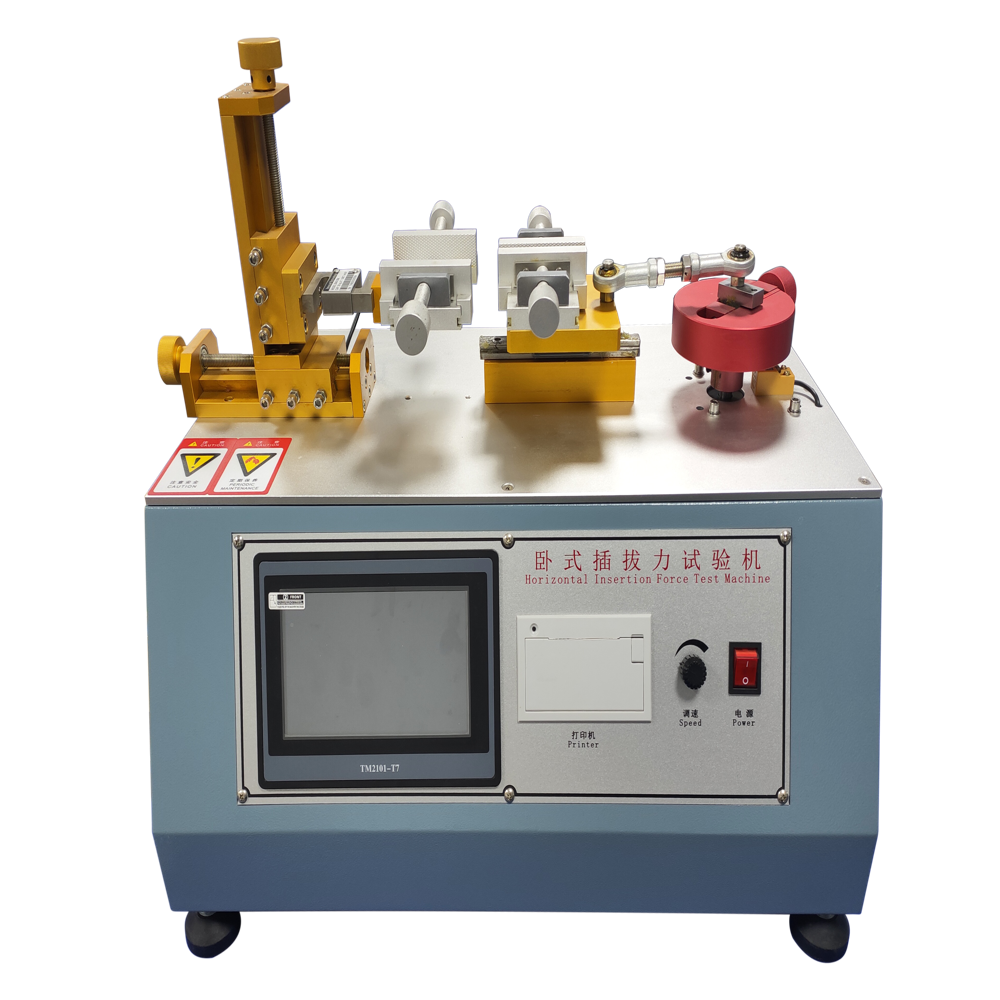
This machine is suitable for plugging and unplugging tests of various connectors. It adopts embedded microcomputer measurement and control technology, and can simultaneously display the insertion force, extraction force, and real-time force value. It also has the function of setting the number of times, adjusting the speed and stroke, and displaying the speed value, automatic zeroing, unit conversion, etc. The rotating eccentric wheel power design makes the test speed and test stroke no longer related, and the test of connectors with long and short strokes is equally fast.
It can be said to be the most cost-effective plugging and unplugging life tester on the market.
Main Technical Parameters:
1.Number range: 0999999
2.Transmission mode: Rotating eccentric wheel
3.Display mode: Touch screen real-time display
4.Plugging force range: 050kg
5.Minimum plugging force resolution: 0.01kg
6.Stroke adjustment range: 060MM
7.Test speed: 560 times/minute (digital display)
8.Two unit conversions: N, KG
9.Dimensions: 600(D)*470(W)*450(H)mm
10.Working voltage: Single-phase 220V
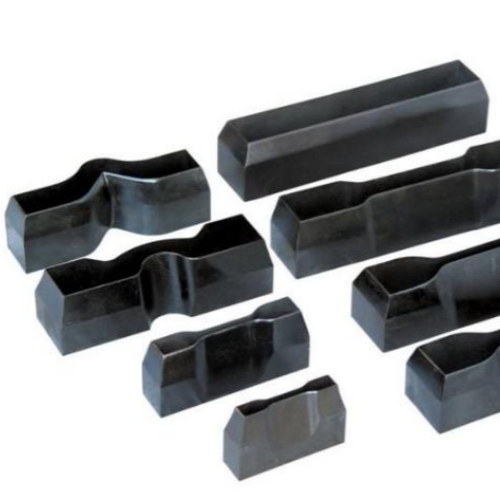
Precision Testing with Interchangeable FixturesThis machine utilizes interchangeable precision fixtures, accommodating various connector and plug formats. The high-strength metal fixtures ensure repeatable and reliable testing, while customizable ports enable quick adaptation to different specimen sizes. This flexibility makes the equipment suitable for manufacturers, exporters, and quality control laboratories conducting diverse force testing scenarios.
Advanced Control and Data ManagementFeaturing a digital touch screen LCD, the tester offers touch program control, adjustable speed, and real-time data display. Data export is seamless via USB or RS-232, and users benefit from force-displacement curve plotting, automatic peak capture, and integrated mini-printer for immediate reporting. Automated calibration and over-force protection enhance accuracy and safety.
Robust Build and Safety AssurancesConstructed from electro-coated steel, the machine ensures longevity and vibration resistance. Safety is prioritized with emergency stop features and over-force protection. Its quiet operation (<55 dB), low standby power consumption (<6 W), and bench-top design with caster wheels make it both practical and portable for laboratory and quality assurance environments.
FAQ's of Horizontal Insertion Force Testing Machine for Precision Force Testing:
Q: How does the Horizontal Insertion Force Testing Machine ensure precise and repeatable force measurements?
A: Precision is achieved through the use of imported sensors with 0.5% full-scale accuracy, interchangeable high-strength metal fixtures, and automatic calibration support. Customizable fixture ports and touchscreen accuracy further reinforce reliable, repeatable testing across various connector and plug types.
Q: What applications can benefit from this testing machine?
A: This machine is ideal for insertion, retention, and withdrawal force testing of connectors and terminals, serving industries involved in electronics assembly, quality control, research, and certification. Its versatility makes it suitable for manufacturers, exporters, and labs dealing with connector-type products.
Q: When is real-time data export and curve plotting advantageous?
A: Real-time data export via USB/RS-232 and force-displacement curve plotting support immediate analysis and streamlined reporting. This is especially beneficial in environments requiring quick feedback, ongoing quality assurance, or documentation for compliance and process improvement.
Q: Where can the Horizontal Insertion Force Testing Machine be installed?
A: Designed as a bench-top system with convenient caster wheels, the machine fits seamlessly into laboratory workspaces or quality control areas. Its compact build and adjustable ports allow integration on test benches or dedicated stations, facilitating easy movement and setup.
Q: What is the process for calibrating this machine?
A: The tester features an auto-calibration function, ensuring minimal manual intervention and consistent accuracy. Users initiate calibration through the touch screen, following on-screen prompts until the process confirms system readiness for reliable measurements.
Q: How does the safety system protect operators and equipment?
A: Safety is reinforced through an over-force protection mechanism and an accessible emergency stop button. These features prevent potential equipment overload, mechanical damage, or accidental operator injury during force testing procedures.
Q: What are the main benefits of using this equipment for laboratory or quality control testing?
A: Benefits include high accuracy and resolution, real-time data export, customizable setup, automated reporting, and advanced safety. Laboratories and quality control departments achieve faster, more reliable test results, evidence-based reporting, and compliance with industry standards.
 English
 Spanish
 French
 German
 Italian
 Chinese (Simplified)
 Japanese
 Korean
 Arabic
 Portuguese










 Send Inquiry
