Product Description
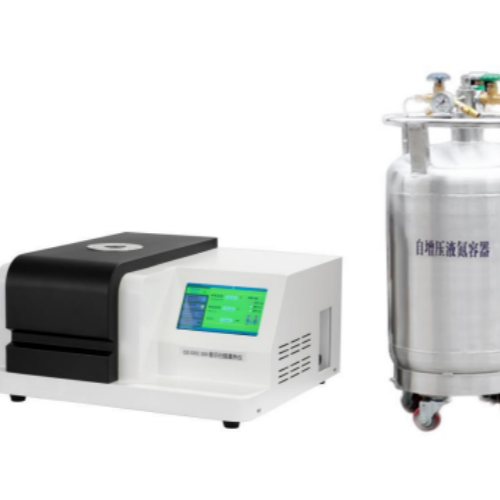
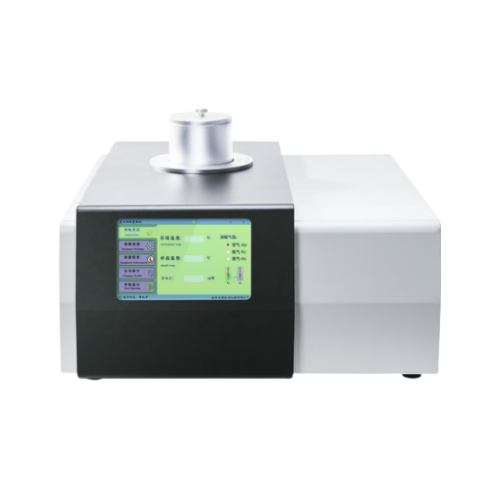
Differential Scanning Calorimeter DH-DSC-300L
Product introduction:
The differential scanning calorimeter is a touch screen type that can perform glass transition temperature tests, phase transition tests, melting and thermal enthalpy tests, product stability, oxidation induction period tests, specific heat tests, etc. It is mainly used in the chemical industry, energy, metallurgy, mining, polymer materials, metal materials and other industries.
Technical parameter:
(1)Temperature range: -150C to 600C, liquid nitrogen refrigeration (self-pressurization)
(2)Temperature resolution: 0.001C
(3)Temperature fluctuation: 0.01C
(4)Temperature repeatability: 0.1C
(5)Heating/cooling rates: 0.1C to 100C/min/0.1C to 40C/min
(6)Constant Temperature Time: 0-400 minutes
(7)Temperature Control: Heating, Cooling, Constant Temperature
(8)DSC Range: 0-600mW
(9)DSC Resolution: 0.01W
(10)DSC Sensitivity: 0.001mW
(11)Power Supply: AC220V/50Hz or Customized
(12)Cooling System: Liquid Nitrogen
(13)Atmosphere Control Gases: Nitrogen, Oxygen (Automatic Switching)
(14)Gas Flow: 0-300 mL/min
(15)Gas Pressure: 0.2 MPa
(16)Display: 24-bit color, 7-inch LCD touchscreen
(17)Data Interface: Standard USB
(18)Parameter Standards: Supplied with reference materials (indium, tin), user can do temperature calibration by themselves
(19)The coordinate range of the operating software is automatically switched without manual adjustment; the analysis results of the software can be displayed at will by dragging the position
(20)The instrument has multiple sets of thermocouples, one set to test the sample temperature and the other set to test the instrument's internal ambient temperature.
(21)The machine has a multi-point calibration function, at least 3 points calibration; one-button calibration
(22)The software can open multiple curves,and analyze simultaneously more than 5 curves
Technical features:
(1)Industrial-grade 7-inch touchscreen,displays rich information.
(2)The new furnace structure is compatible with a variety of refrigeration units.
(3)USB communication interface provides high versatility, reliable and uninterrupted communication, and supports self-recovery.
(4)Automatically switches between two atmosphere flow rates with fast switching speed and short stabilization time. Simultaneously adds a shielding gas input. The software is simple and easy to use.
Advanced Thermal Analysis CapabilityThe DH-DSC-300L provides comprehensive assessment of heat flows associated with material transitions, including melting, crystallization, and glass transitions. Its high sensitivity and precision are anchored by a platinum sample holder, allowing reliable measurements for quality control and advanced research.
User-Friendly Interface and AutomationEquipped with a color LCD touch screen and microcomputer control, this calorimeter simplifies operation and data management. Automatic baseline correction and intuitive software enhance accuracy, reduce user error, and streamline every testing process-ideal for busy laboratories or industrial setups.
Flexible Atmosphere and Cooling OptionsWith atmosphere control for nitrogen, oxygen, air, or argon and a choice between liquid nitrogen or mechanical cooling, the DH-DSC-300L adapts easily to varied experimental requirements. This flexibility assures optimal conditions for sensitive material analyses across different industries.
FAQ's of Differential Scanning Calorimeter DH-DSC-300L:
Q: How does the DH-DSC-300L Differential Scanning Calorimeter operate during thermal analysis?
A: The DH-DSC-300L gradually heats or cools a specimen and measures the heat flow associated with material phase transitions. The microcomputer control and programmable temperature rates provide precise and repeatable testing, while automatic baseline correction ensures accurate results.
Q: What types of materials can be analyzed with this equipment?
A: This calorimeter is suitable for analyzing polymers, pharmaceuticals, food, and other materials that require detailed thermal profiling. Its measuring range from -20C to 600C accommodates a wide variety of samples in research and quality assurance.
Q: When is it necessary to use controlled atmospheres like N2, O2, air, or argon during testing?
A: Controlled atmospheres are used to prevent unwanted reactions or to study material behavior under specific environmental conditions. The DH-DSC-300L's atmosphere control lets users optimize testing for sensitive or reactive samples.
Q: Where is the DH-DSC-300L typically installed or used?
A: With its compact benchtop design and robust construction, the DH-DSC-300L is ideal for installation in research labs, quality control departments, and industrial R&D facilities where precise thermal analysis is essential.
Q: How are data stored and accessed after each experiment?
A: The device offers both internal and external data storage options, supporting USB and RS232 interfaces. This flexibility allows for easy transfer, backup, and analysis of results for research documentation or industrial reporting.
Q: What benefits does automatic baseline correction offer in thermal analysis?
A: Automatic baseline correction minimizes manual adjustments and reduces experimental errors, leading to higher reproducibility and accuracy in measurement-especially important in high-sensitivity applications.
 English
 Spanish
 French
 German
 Italian
 Chinese (Simplified)
 Japanese
 Korean
 Arabic
 Portuguese









 Send Inquiry
