Product Description
Application
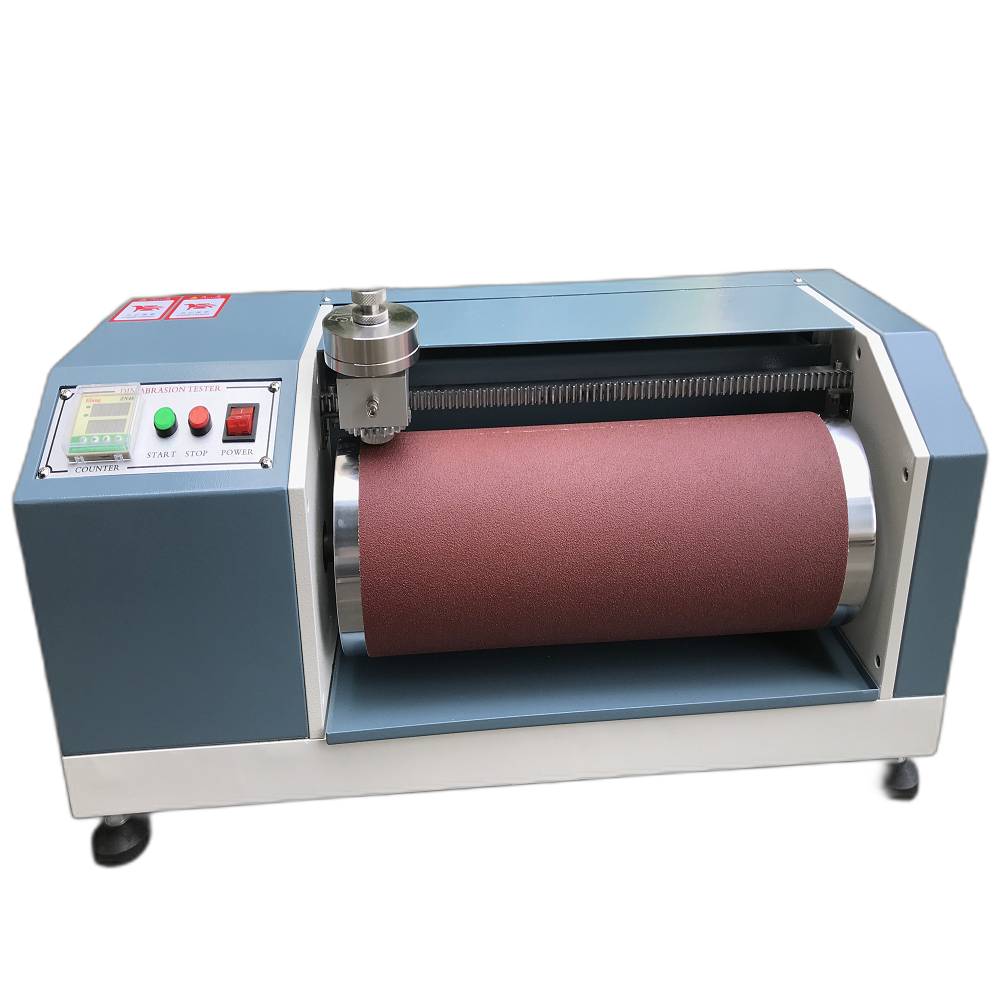
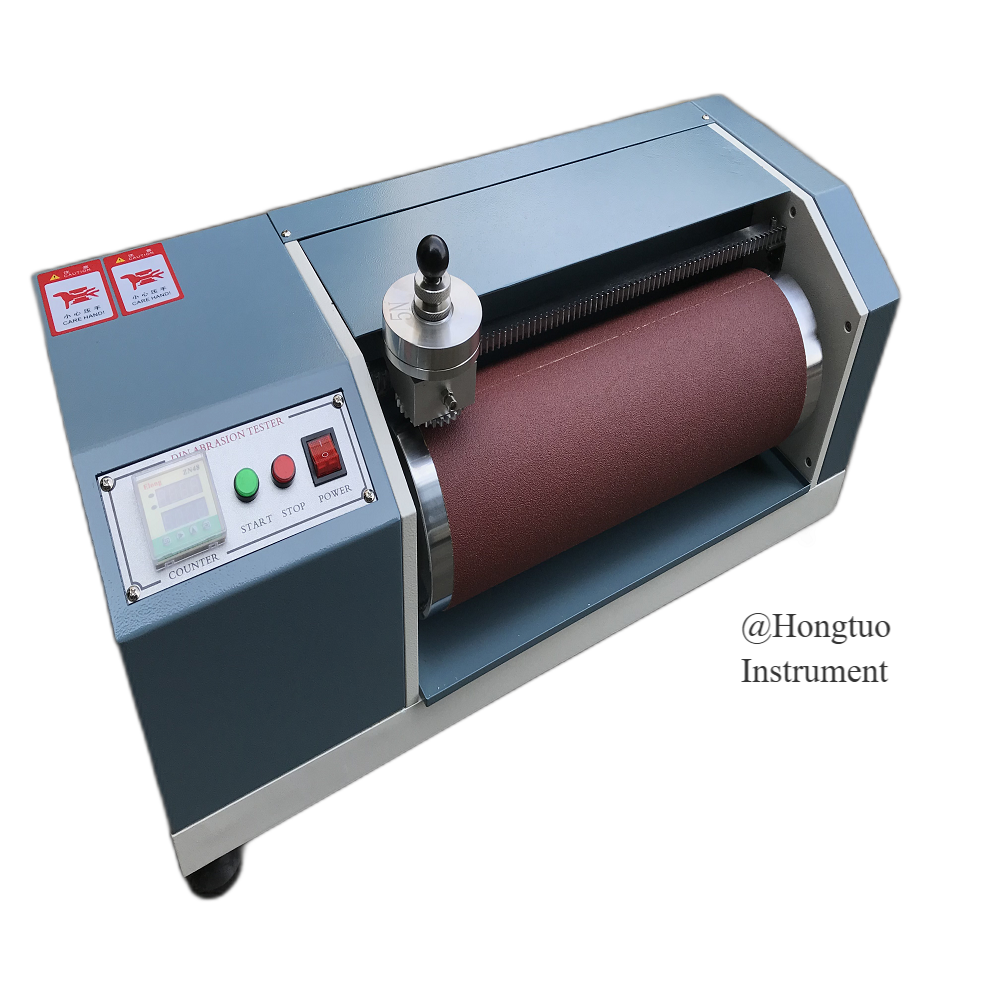
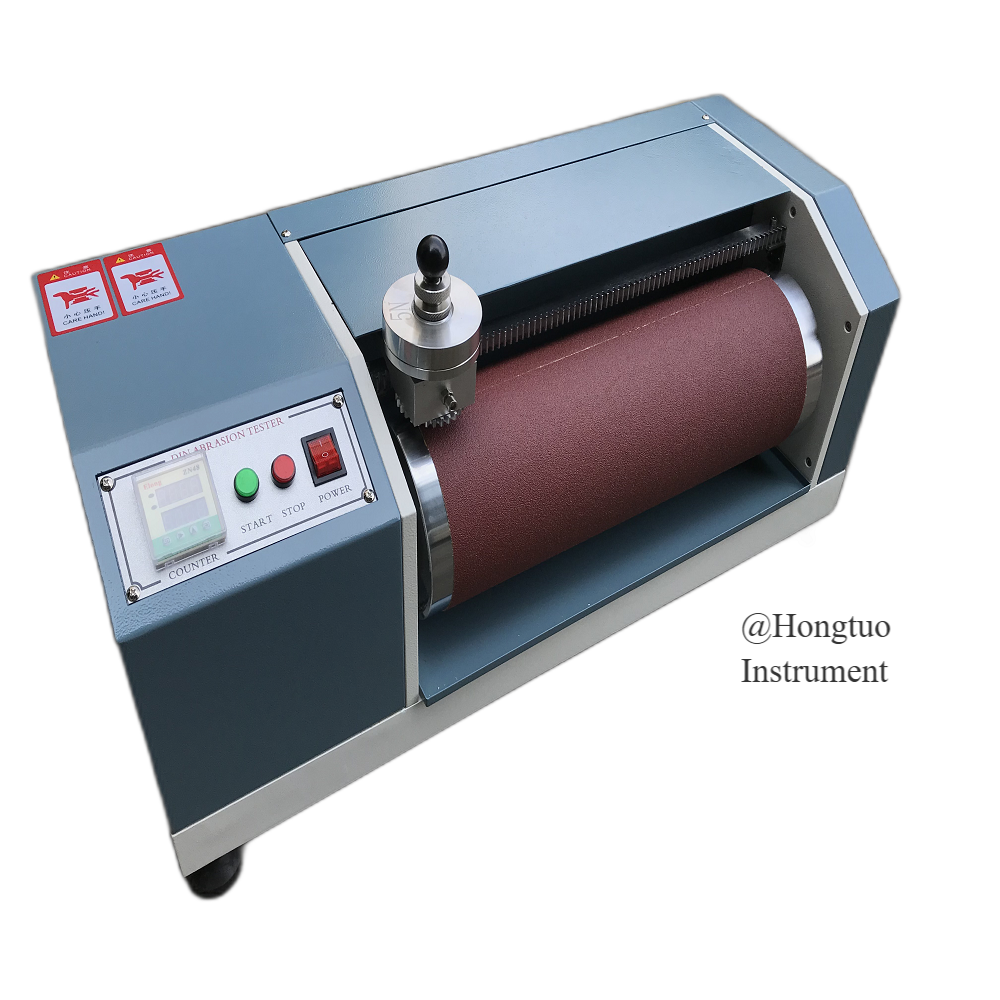
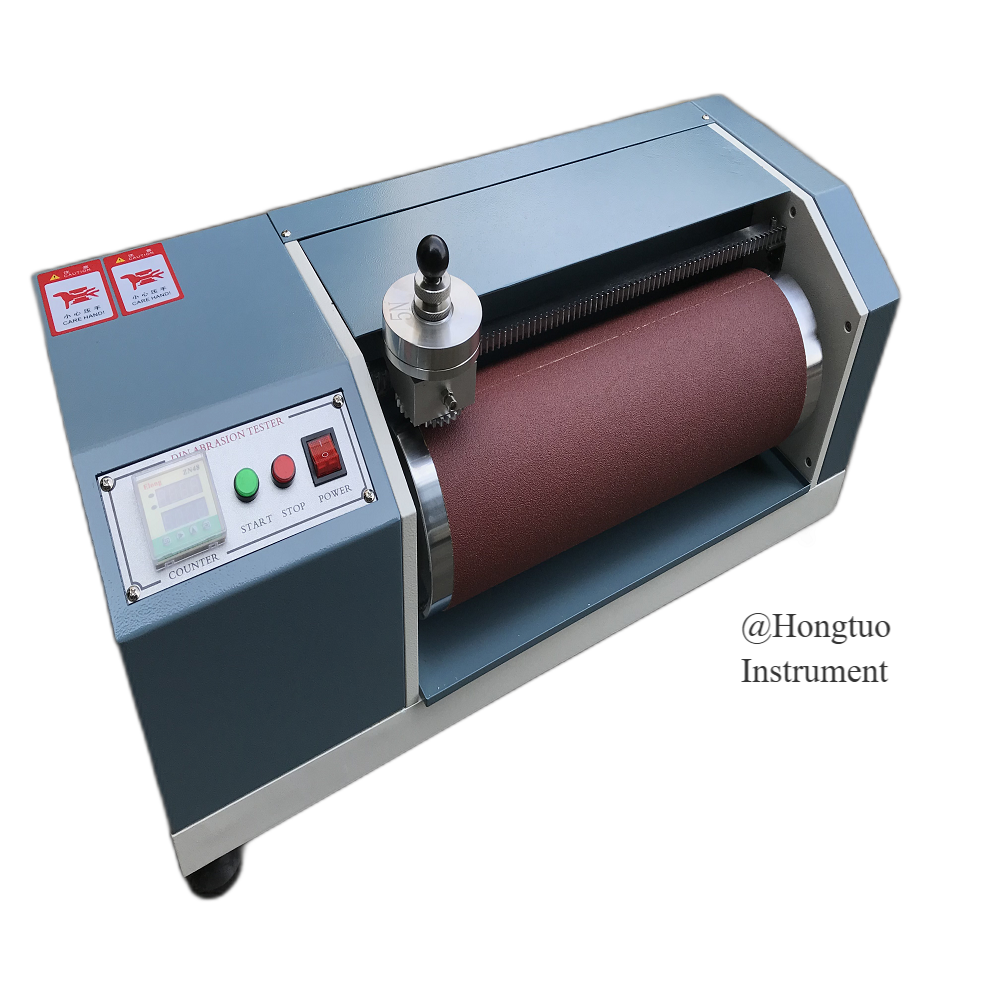
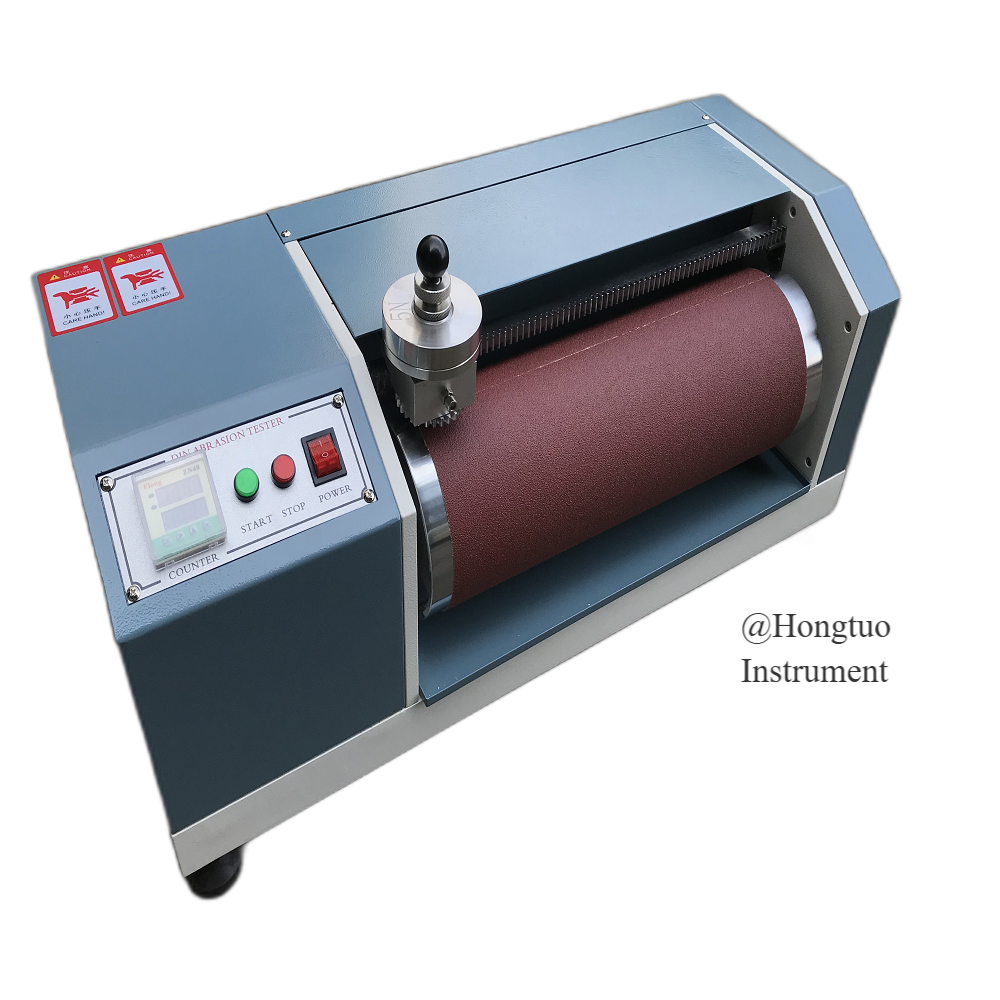
Suitable to determine the wear resistance of elastic material, rubber, tires,conveyor belts,shoe soles, soft synthetic leather and other materials.
Standards
DIN-53516,ISO/DIS-4649,GB-9867
Principle
Under a predetermined contact pressure and a given area,the specimen with sandpaper angled to measure abrasion resistance of the specimen subjected to rubbing on a certain level of sandpaper, sandpaper affixed to the surface of the drum, samples pressed on a drum with sandpaper, and the specimen along the roller to the lateral movement, abrasion resistance is produced at one end of the cylindrical specimen, tests the value of the mass loss of the specimen, by the density of the specimen to calculate the amount of volume abrasion.
Specifications
Roller diameter:150mm
Roller length:460mm
Rotate speed:40rpm
Abrasion stroke:40mm(20mm)
Abrasion speed:0.32m/sec
Dip angle:3
Specimen diameter:16 mm
Thickness:615 mm
Testing load:5N,10N
Clamp horizontal displacement:4.2mm/roll each lap
Standard accessories:one set of sampler,two pieces of abrasive
paper(VSM60#,41*47.6CM),three pieces of standard gel(16*8mm),one piece of power cord.
Precision Abrasion Resistance TestingDesigned for precise measurement, this DIN Abrasion Tester accurately assesses wear on rubber and elastomer samples. With a measuring range up to 200 mm3 loss and 0.1 mm resolution, it provides reliable data for product development and quality control. The digital counter ensures straightforward cycle tracking and automatic stop improves repeatability.
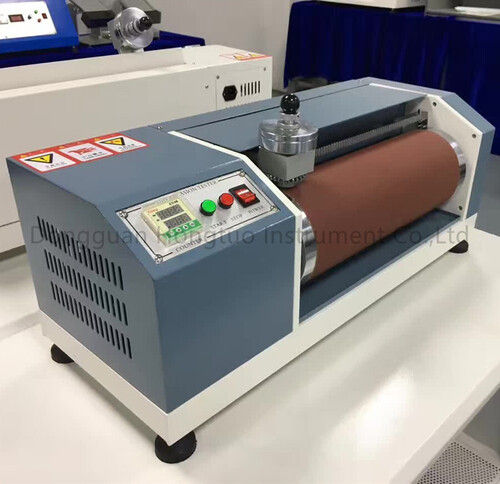
Robust and User-Friendly OperationThis tester boasts a stable, precision-constructed frame, automatic test end, emergency stop, and overload protection. Its digital interface offers intuitive push-button operation, while the bench-top mount and semi-automatic design make it suitable for diverse laboratory environments. Low noise output (70 dB) and easy maintenance further support efficient daily use.
Compliant with International StandardsThe DH-DIN Abrasion Tester fully complies with DIN 53516 and ISO 4649, making it ideal for laboratories and manufacturing settings that require standardized reporting. Accurate up to 0.1 mm and compatible with Shore A 35-85 materials, it is suitable for rigorous industrial and research applications.
FAQ's of DH-DIN Abrasion Tester for Rubber and Elastic Materials:
Q: How does the DH-DIN Abrasion Tester evaluate the wear resistance of rubber materials?
A: The tester measures wear by rubbing a specimen against 60# grit abrasive paper mounted on a rotating drum. The linear movement and offset rotating fixture replicate real-world abrasion, while the digital counter tracks the cycles until the preset limit or sample failure. Material loss is then quantified in mm3.
Q: What types of materials can be tested with this abrasion tester?
A: It is suitable for rubber and elastic materials with hardness values between Shore A 35 and 85. The standard specimen size is 6-10 mm thick and 16 mm in diameter, as specified by DIN standards for accurate and comparable results.
Q: When should the tester's emergency stop or overload protection be utilized?
A: The emergency stop and overload protection features are safety mechanisms that should be engaged if the machine malfunctions, an unexpected event occurs, or if testing parameters are being exceeded, ensuring operator safety and preventing equipment damage.
Q: Where is the DH-DIN Abrasion Tester typically used?
A: This abrasion tester is commonly used in quality control labs, research and development centers, and manufacturing facilities involved in rubber product production, parts supply, and material certification processes worldwide.
Q: What is the process for conducting an abrasion test with this equipment?
A: Place a prepared specimen in the offset fixture, set test parameters on the digital counter, and start the machine. The sample is abraded at 40 rpm along a linear path, with automatic stop once the preset cycle count is reached. Material loss is measured post-test.
Q: How does the automatic stop and digital counter benefit the user?
A: Automatic stop ensures precise, repeatable test conclusions without operator intervention. The digital counter allows for exact control over test cycles, enhances consistency, and instantaneously displays results, improving both efficiency and accuracy during testing.
 English
 Spanish
 French
 German
 Italian
 Chinese (Simplified)
 Japanese
 Korean
 Arabic
 Portuguese











 Send Inquiry
