Product Description
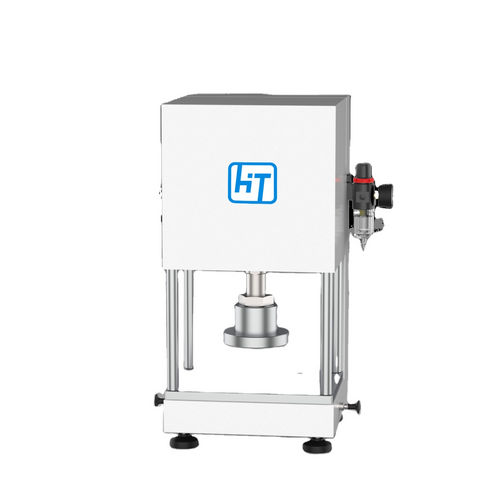
Pneumatic Press Plastic Rubber Slicer
Introduction:
The pneumatic slicer is mainly used for rubber cutting standard test pieces, and it is necessary to match the standard knife die.and connect the gas source above 4KG.
Specification:
1. Load: 1000KG.
2. Platen diameter: 120 mm.
3. Base plate: 230*250mm.
4. Effective height: 100mm.
5. Machine size: 280*330*430mm.
6. Machine weight: about 20 kg.
Operation:
1. Place the machine on a flat surface, adjust the four feet to make it stable.and put the cutting glue.
2. Open the ventilation source, adjust the rear oil-water separator valve switch, adjust the barometer to at least 4KG.
3. Put the PU glue, put the film on the glue, then put the knife mold, then hold the red button switch at the same time with both hands (for safety, both hands must be pressed at the same time), press the plate down on the knife mold, stay for a few seconds, so that the rubber is fully cut off, and at the same time let go, take out the test piece.
4. When you are finished, please turn off the air supply.
Precision Slicing for Reliable Sample PreparationEngineered for accuracy, the pneumatic press delivers clean and reproducible cuts on a variety of plastic and rubber specimens. Adjustable speed control and a digital display allow fine-tuning of every slice, ensuring high-quality preparation for laboratory testing. With its versatile measuring range and capacity, users can expect top-notch results with minimal effort.
Robust Construction and Safety FirstManufactured from high-grade mild steel and aluminum, this slicer is designed to serve high-intensity labs with longevity in mind. Hardened stainless steel blades and protective features such as a safety guard and interlock system help prevent accidents. A non-slip base and emergency stop accentuate its commitment to safe and stable operation.
User-Friendly and Efficient DesignWith semi-automatic control, operators may use either a foot pedal or push buttons, catering to various working styles. Self-lubricating bearings facilitate maintenance-free operation, while a low noise profile and compact tabletop design make it a welcome addition to busy labs. The onsite training and installation support ensure a smooth start for every user.
FAQ's of Pneumatic Press Plastic Rubber Slicer:
Q: How does the Pneumatic Press Plastic Rubber Slicer operate?
A: This slicer operates using either a foot pedal or push-button interface, allowing users to choose the most convenient mode. It uses pneumatic pressure to drive a hardened stainless steel blade, offering fast and accurate specimen preparation.
Q: What types of materials can the equipment slice and what is its capacity?
A: The slicer is specially designed for cutting and slicing soft and medium rubber materials as well as plastic specimens. It can handle specimens up to 150 20 10 mm in size, with a maximum force capacity of 10 kN.
Q: When is onsite installation and training available and what does it include?
A: Onsite installation and training are available with every purchase upon delivery. The service covers both equipment setup and comprehensive user training, ensuring safe and effective use right from the start.
Q: Where should the slicer be mounted for optimal use?
A: The equipment is designed for table-top mounting, offering stability and convenience in laboratory environments. Make sure the table is level and can support the slicer's 20 kg weight for best performance.
Q: What features ensure operator safety during use?
A: Safety features include a robust protective guard, interlock system, emergency stop button, and non-slip base, significantly minimizing risk during operation.
Q: How does the slicer benefit laboratory testing processes?
A: By enabling precise, repeatable slicing with high-resolution control (0.01 mm), the slicer ensures that each specimen meets testing requirements, thus improving the reliability and accuracy of test results.
Q: What maintenance does the slicer require and how is downtime minimized?
A: With self-lubricating bearings, regular maintenance is minimal. This feature, along with robust build quality, helps reduce unexpected downtime and prolong equipment lifespan.











 Send Inquiry