Product Description
Usage:
The product is suitable for elemental analysis, measurement and small size steel hardening, annealing, tempering, heat treatment and heating in laboratory, industrial and mining enterprises, scientific research units,can also be used for sintering of metal, stone, ceramic, dissolution analysis of high-temperature heating.
Characteristics:
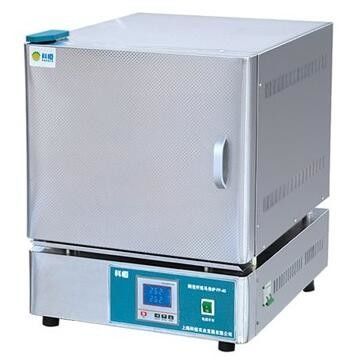
The shell is made of high-quality grid stainless steel, attractive appearance and modeling.
Unique door design, safe and easy door operation, to ensure the high temperature inside that the heat does not leak.
The working room is made of high quality ceramic fiber insulation material, has good insulation property, save energy, and light weight, easy to move.
Heating system automatically stops when the door is opened, without the disadvantage of temperature overshoot.
Optional part: intelligent program temperature controller ......... USD399.
Main Parameter:
Model: DH-FP-25
Voltage(V): 220
Rated power(kw): 2.5
Rated temperature: 1000 degree
Size of workroom (mm): 200*120*80
overall dimensions (mm): 485*405*550
Packing(mm):560*485*670
Net weight (kg): 42
Gross weight (kg): 51
Precision Heating for Laboratory NeedsEngineered for critical laboratory tasks, the muffle furnace achieves impressive temperature uniformity (5C) and accuracy (1C at steady state), making it ideal for applications such as heat treatment and ash determination. The chambers advanced ceramic fiber insulation minimizes energy consumption while maximizing operational safety through built-in protection features.
Versatile Design and User-Friendly OperationAvailable in various chamber sizes, the furnace supports multiple and variable specimen dimensions within a compact, benchtop footprint. The digital PID controller, LED/digital display, and programmable timer make the operation intuitive, while the insulated front-loading door and secure latch ensure safe access during testing.
Safety and Efficiency at the ForefrontWith a robust powder-coated exterior finish and reliability-enhancing features like over-temperature cut-off, alarm buzzer, door interlock, and energy-efficient insulation, the furnace stands out for both operational security and cost-effectiveness. Natural convection cooling and rapid heating response contribute to efficient test cycles in lab settings.
FAQs of Lab High Temperature Muffle Furnaces Oven Chamber:
Q: How does the Lab High Temperature Muffle Furnace maintain temperature uniformity during operation?
A: The furnace utilizes high-quality ceramic fiber insulation with a high alumina lining, along with advanced heating elements (Kanthal A1 or MoSi2) and a digital PID controller, which work together to maintain temperature uniformity within 5C throughout the chamber.
Q: What applications can this muffle furnace be used for in the laboratory?
A: This furnace is suitable for various laboratory tasks, including ash content determination, materials heat treatment, laboratory sample processing, and general testing where precise high temperatures are essential.
Q: When is over-temperature protection activated and how does it ensure safety?
A: Over-temperature protection is automatically activated if the chamber temperature exceeds the programmed safety limit; the furnace then engages a cut-off and alarm buzzer, while the door interlock prevents access, safeguarding both users and specimens against overheating.
Q: Where can I install this muffle furnace in a laboratory setting?
A: Due to its compact, table-top/benchtop design and moderate maximum external height (up to 600 mm), the furnace can be conveniently placed on standard laboratory counters for easy access and efficient workflow integration.
Q: What process steps are involved in operating the furnace for a standard heating test?
A: Operation involves loading specimens into the chamber, setting target parameters via panel controls (temperature, timer), initiating the heating cycle, and monitoring progress on the LED/digital display. The door remains securely latched until the cycle completes, and cooling occurs via natural convection.
Q: How does the furnace benefit laboratory workflows compared to traditional ovens?
A: Its rapid heating response (less than 30 minutes to maximum temperature), high energy efficiency, robust safety systems, and programmable control modes significantly enhance testing throughput and reliability compared to standard laboratory ovens.
 English
 Spanish
 French
 German
 Italian
 Chinese (Simplified)
 Japanese
 Korean
 Arabic
 Portuguese










 Send Inquiry